Try Tidyflow
Get your firm organized.
Watch a 4-minute demo, or start a free trial. No credit card required.
“We work with small businesses” isn’t a niche — it’s a description of 90% of accounting firms. A real niche means being the go-to firm for a specific type of client, and it’s one of the most effective ways to grow an accounting practice.
This guide covers why niching works, which niches are worth pursuing, and how to make the transition from generalist to specialist.
Why Niching Works
Generalist accounting firms compete on price and proximity. Niche firms compete on expertise. Here’s why that matters:
You can charge more. An accountant who specializes in dental practices understands the specific tax deductions, equipment depreciation rules, and financial benchmarks for dentists. That expertise is worth more than generic bookkeeping — and dentists will pay for it.
Marketing becomes easier. “We help e-commerce businesses save on taxes and manage inventory accounting” is a specific message that resonates with a specific audience. “We help small businesses with their accounting needs” is background noise.
Referrals accelerate. When a dentist recommends an accountant to another dentist, they don’t say “use my accountant, they’re pretty good.” They say “use [Firm Name], they specialize in dental practices and they know the industry inside out.” Specific expertise generates specific, high-quality referrals.
You get more efficient. When every client has similar needs, you develop standardized processes, templates, and workflows. Your 50th dental practice takes half the time of your 5th because you’ve seen every scenario before.
You become findable. A dentist searching Google for “accountant for dental practices” will find you. Searching “accountant” will find 10,000 firms.
Profitable Niches for Accounting Firms
Not all niches are equally profitable. The best niches have:
- Enough potential clients to sustain your firm (at least several hundred within your target geography or nationwide if you work remotely)
- Specific accounting needs that require specialized knowledge (generic businesses don’t need a specialist)
- Willingness to pay for expertise (some industries are more price-sensitive than others)
- Recurring revenue potential (monthly bookkeeping, payroll, compliance — not just annual tax returns)
Healthcare and Medical Practices
Dentists, physicians, optometrists, physiotherapists, veterinarians.
- Why it works: Complex revenue models (insurance billing, patient payments, government rebates), expensive equipment depreciation, high income earners with sophisticated tax needs.
- Revenue potential: High. These practices generate significant revenue and need ongoing financial support.
- Specific needs: Medicare/insurance billing reconciliation, practice valuation, associate buy-in structures.
E-Commerce and Online Retail
Shopify, Amazon, and other online sellers.
- Why it works: Sales tax complexity (nexus rules, multi-state/country obligations), inventory accounting, platform-specific reporting.
- Revenue potential: Medium to high, depending on seller size. High volume of businesses in this space.
- Specific needs: Multi-state sales tax, inventory valuation (FIFO/LIFO), marketplace integrations, international VAT.
Real Estate and Property
Investors, developers, property managers, real estate agents.
- Why it works: Complex depreciation schedules, 1031 exchanges (US), capital gains planning, entity structuring for multiple properties.
- Revenue potential: High. Property investors tend to have complex portfolios and ongoing needs.
- Specific needs: Depreciation schedules, rental property accounting, entity structuring, capital gains optimization.
Construction and Trades
Builders, electricians, plumbers, HVAC contractors.
- Why it works: Project-based accounting, job costing, progress billing, contractor vs employee classification issues.
- Revenue potential: Medium to high. Steady demand as construction is cyclical but always active.
- Specific needs: Job costing, WIP (work in progress) reporting, contractor compliance, equipment depreciation.
SaaS and Technology Startups
Software companies, tech startups, app developers.
- Why it works: Revenue recognition complexity (ASC 606), R&D tax credits, stock option accounting, fundraising and cap table management.
- Revenue potential: Variable. Startups may not be profitable initially, but grow fast. SaaS businesses with recurring revenue can be very profitable clients.
- Specific needs: Revenue recognition, R&D tax credits, equity compensation, financial modeling for fundraising.
Professional Services
Law firms, architects, consulting firms, marketing agencies.
- Why it works: Service-based businesses with similar structures to accounting firms. You understand their business model intuitively.
- Revenue potential: Medium to high. These are typically profitable businesses with ongoing needs.
- Specific needs: Partner compensation structures, trust accounting (law firms), project profitability analysis.
Nonprofits
Charities, foundations, social enterprises.
- Why it works: Unique reporting requirements (Form 990 in the US, ACNC in Australia), grant accounting, donor restrictions on funding.
- Revenue potential: Lower individually, but high volume and strong referral networks within the nonprofit community.
- Specific needs: Fund accounting, grant compliance, tax-exempt status maintenance, board reporting.
How to Choose Your Niche
Start With What You Already Have
Look at your current client base. Is there a cluster of clients in the same industry? If you already have 8 dental practices and 5 construction companies among 50 clients, you have a head start in both niches.
Evaluate Your Interest and Expertise
You’ll need to learn the industry deeply. Choose one you’re genuinely interested in — or at least not bored by. If the thought of learning about dental practice management makes you want to change careers, that’s not your niche.
Research the Market
- How many potential clients exist in your area (or nationwide if you work remotely)?
- What are they currently paying for accounting services?
- Are there existing niche firms serving this market? Competition isn’t necessarily bad — it validates demand. But going head-to-head with an entrenched specialist is harder than entering an underserved niche.
- Where do they gather? Industry associations, conferences, online communities, trade publications. If you can identify where your target clients congregate, you can reach them.
Test Before You Commit
You don’t need to rebrand overnight. Test a niche by:
- Creating a landing page targeting that industry (“Accounting for Dental Practices”)
- Writing 2–3 blog posts about industry-specific topics
- Attending an industry event or joining an online community
- Reaching out to your existing clients in that industry for testimonials
If you get traction — inquiries, engagement, referrals — double down. If not, try a different angle or a different niche.
Making the Transition
Phase 1: Specialize Your Marketing (Not Your Client Base)
Start by marketing to your chosen niche while continuing to serve existing clients. You don’t need to fire all your non-niche clients on day one.
- Update your website to highlight your industry expertise
- Create content that speaks directly to your target niche
- Adjust your pricing to reflect the specialized value you provide
- Join industry associations and attend events
Phase 2: Build Industry-Specific Processes
As you take on more niche clients, standardize your processes:
- Create job templates specific to the industry (e.g., a dental practice year-end template with all the specific line items you’ll need)
- Build document checklists tailored to the niche
- Develop reporting templates that show industry-relevant metrics
- Create a pricing structure based on the typical scope of work for that industry
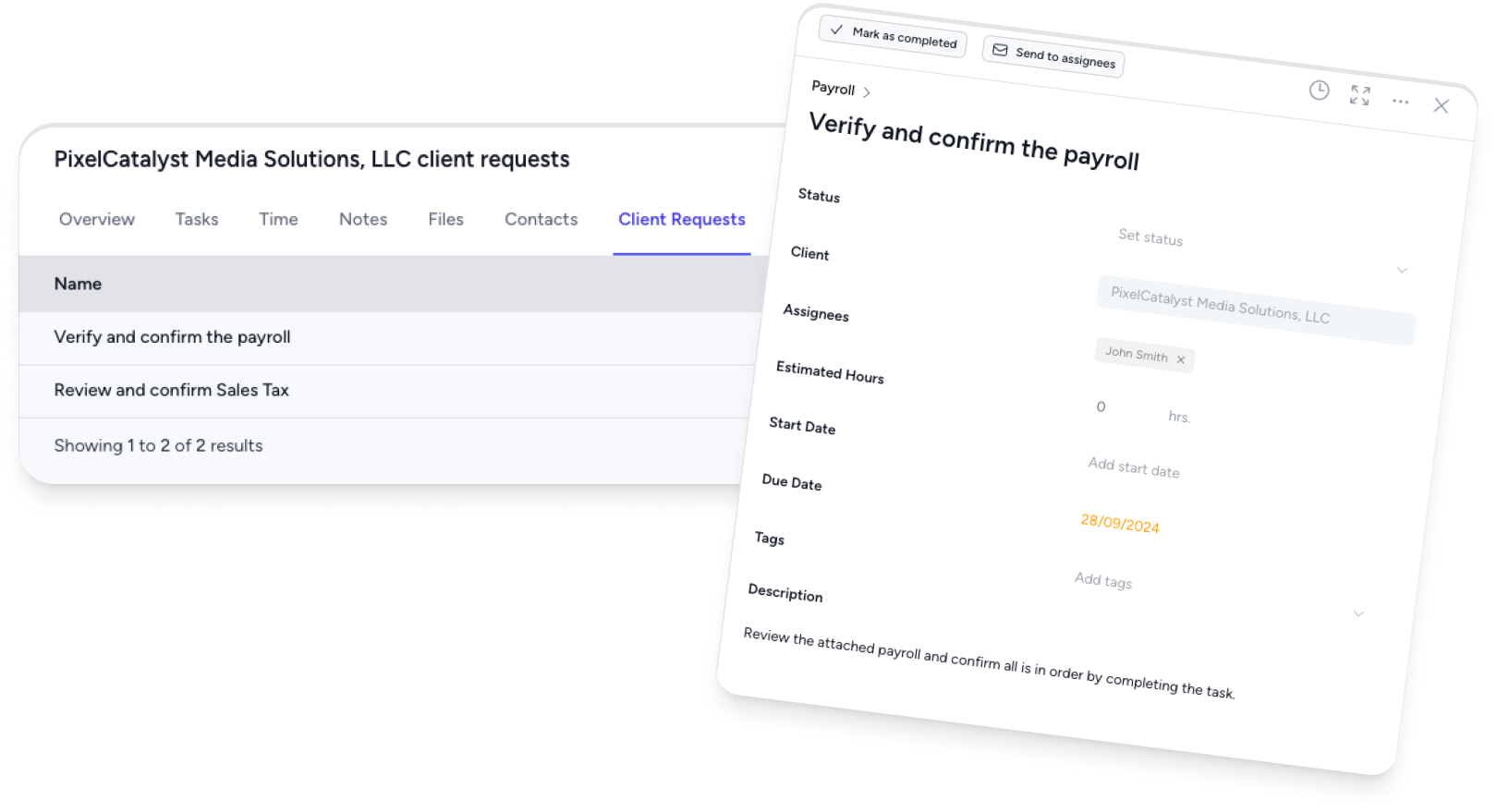
Practice management software like Tidyflow makes this easier with customizable job templates. Create a template once — with all the subtasks, time estimates, and document requirements for a dental practice year-end, for example — and apply it to every new client in that niche. This standardization is what turns niche expertise into niche efficiency.
Phase 3: Gradually Transition Your Client Base
Over 1–2 years, your niche clients should become a growing percentage of your revenue. Some firms go 100% niche; others maintain a core niche (60–70% of revenue) with a broader base for the rest. Either approach works.
Don’t rush to shed non-niche clients, especially profitable ones. The transition should be driven by growth in your niche, not by cutting clients you’re already serving well.
Common Mistakes When Niching
Choosing a niche that’s too small. “Accountant for vegan ice cream shops in Portland” isn’t a niche — it’s a handful of clients. Make sure the market is large enough to sustain your firm’s growth ambitions.
Choosing a niche you don’t enjoy. You’ll be spending years immersed in this industry. If you find it boring, you’ll under-invest in learning and marketing, and the niche will underperform.
Going all-in too fast. Test the niche before committing. Rebrand, create content, attend an event. See if there’s demand before turning away non-niche clients.
Trying to be the cheapest. Niche firms charge more, not less. If you’re competing on price within a niche, you’ve missed the point.
Not actually building expertise. Saying “we specialize in X” on your website isn’t enough. You need to genuinely understand the industry — its challenges, regulations, benchmarks, and common financial mistakes. This takes time and effort.
Getting Started
- Analyze your current client base — identify any natural clusters
- Research 2–3 potential niches — market size, willingness to pay, competition
- Choose one and test it for 3–6 months with targeted content and outreach
- Track results — inquiries, conversion rate, revenue from niche clients
- Double down or pivot based on what the data tells you
The firms that thrive in the next decade will be the ones with a clear answer to “who do you serve?” Not “small businesses.” Not “everyone.” A specific industry, with specific expertise, delivering specific value.