Try Tidyflow
Get your firm organized.
Watch a 4-minute demo, or start a free trial. No credit card required.
Productizing your accounting services means turning custom, scope-it-every-time engagements into defined packages with clear deliverables and fixed prices. Instead of “we’ll do your accounting for you” (which could mean anything), you sell “Monthly Bookkeeping — Growth Package” with a specific scope, specific price, and specific deliverables.
This isn’t just a pricing change — it transforms how you sell, deliver, and scale your firm.
Why Productize?
For Your Firm
Easier to sell. A defined package with a price is easier to present than “it depends.” Prospects can compare, choose, and buy without a lengthy scoping conversation.
More profitable. When you deliver the same service repeatedly, you get faster at it. Fixed prices reward efficiency — the faster you deliver, the higher your effective hourly rate.
Easier to scale. Standardized services can be delegated, templated, and systemized. Adding a new client means applying a template, not inventing a custom engagement.
Predictable revenue. Monthly packages mean recurring revenue. You know what’s coming in next month, which makes hiring, investing, and planning dramatically easier.
For Your Clients
Clarity. They know exactly what they’re getting and what they’re paying. No surprise bills.
Easy comparison. They can compare your packages against competitors (and against each other) to find the right fit.
Confidence. A defined package feels more professional and trustworthy than “we’ll figure out the scope as we go.”
How to Build Your Packages
Step 1: List Every Service You Deliver
Write down everything you do for clients. Be specific:
- Monthly bookkeeping (categorization, reconciliation, reporting)
- BAS/GST/VAT preparation and lodgement
- Payroll processing
- Individual tax returns
- Business tax returns
- Financial statements
- Cash flow forecasting
- Tax planning
- Advisory meetings
- Entity structuring advice
- Accounts receivable management
- Bill payments
Step 2: Group Services Into Logical Tiers
Most firms find that three tiers cover the majority of client needs:
Tier 1 — Essentials (Compliance only) What every client needs at minimum. The basics, done well.
Tier 2 — Growth (Compliance + operational support) Everything in Essentials plus services that help the business run better.
Tier 3 — Premium (Compliance + operational + strategic) Everything in Growth plus advisory, planning, and strategic guidance.
Step 3: Define Scope Boundaries
For each tier, specify:
- What’s included (be specific about limits — e.g., “up to 150 transactions/month”)
- What’s not included (explicit exclusions prevent scope creep)
- What triggers an upgrade to the next tier
Example Package Structure
Essentials — $400–800/month
Best for: Sole traders, freelancers, and micro-businesses with simple needs.
| What’s Included | Details |
|---|---|
| Monthly bookkeeping | Up to 50 transactions, 2 bank accounts |
| Bank reconciliation | Monthly |
| Financial reports | Monthly P&L |
| Annual tax return | 1 individual or sole trader return |
| Compliance lodgements | BAS/GST (quarterly) |
| Email support | 2 business day response |
Not included: Payroll, advisory calls, multiple entities, complex tax planning.
Growth — $1,000–2,000/month
Best for: Small businesses with 1–15 employees who need more support.
| What’s Included | Details |
|---|---|
| Monthly bookkeeping | Up to 200 transactions, 5 bank/credit card accounts |
| Bank reconciliation | Monthly |
| Financial reports | Monthly P&L, balance sheet, cash flow |
| Annual tax return | Business entity return + 1 individual |
| Compliance lodgements | BAS/GST (monthly or quarterly) |
| Payroll | Up to 10 employees |
| Quarterly advisory call | 30-minute review of financial performance |
| Email support | Same business day response |
Not included: Multiple entities, virtual CFO services, complex restructuring.
Premium — $2,500–5,000/month
Best for: Growing businesses that want strategic financial guidance.
| What’s Included | Details |
|---|---|
| Everything in Growth | Higher transaction limits as needed |
| Payroll | Up to 30 employees |
| Cash flow forecasting | Monthly, 90-day rolling forecast |
| Tax planning | Proactive strategies, not just compliance |
| Monthly advisory meeting | 60-minute strategic review |
| KPI dashboard | Custom metrics tracked monthly |
| Budget preparation | Annual budget with quarterly updates |
| Priority support | Same-day response, direct phone line |
Not included: Audit, legal advice, international tax (available as add-ons).
Add-Ons (Available With Any Package)
| Service | Price |
|---|---|
| Additional tax returns (individual) | $300–600 each |
| Additional tax returns (business entity) | $800–2,000 each |
| Entity restructuring | From $2,000 (scoped individually) |
| R&D tax credit claim | From $3,000 (scoped individually) |
| Virtual CFO engagement | From $3,000/month |
| One-off cleanup / catch-up bookkeeping | $100–150/hour |
How to Price Your Packages
Cost-Plus Method
- Calculate your cost to deliver the service (labor hours × internal cost per hour + software/overhead allocation)
- Add your target margin (60–70% gross margin for a healthy firm)
- That’s your floor price
Example: Growth package takes ~12 hours/month to deliver. Your internal cost is $60/hour. Cost = $720. At 65% margin, price = $720 ÷ 0.35 = ~$2,060/month.
Market Comparison
Check what competitors charge for similar scope. You don’t need to match them, but you need to be in range. If you’re 2x the market price, you need a clear reason why.
Value Anchoring
Present your premium tier first. When a client sees the Premium package at $4,000/month, the Growth package at $1,500/month feels like a great deal. This is the decoy effect — and it works.
For detailed pricing benchmarks, see our guide on pricing accounting services.
Selling Productized Services
Create a Services Page
Put your packages on your website with pricing (or starting-from pricing). This:
- Pre-qualifies prospects (they know the cost before contacting you)
- Saves you time on proposals
- Signals confidence and transparency
Use a Simple Proposal Template
Instead of custom proposals for every prospect, create a template:
- Summary of their situation (2–3 sentences about their business)
- Recommended package (with scope and price)
- What they’ll get (deliverables, frequency, who they’ll work with)
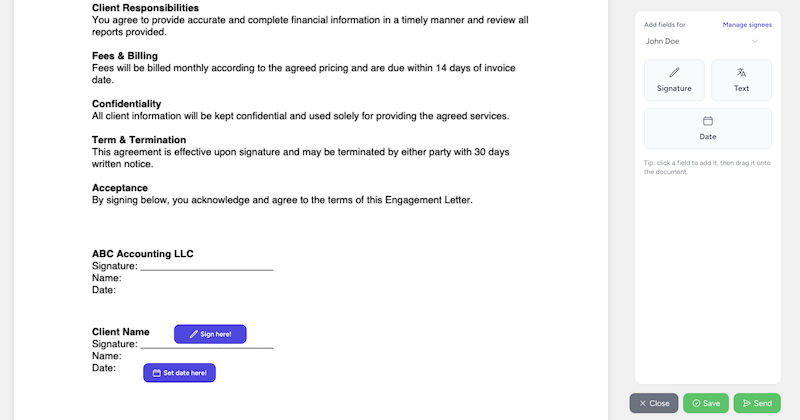
- Next steps (sign the engagement letter, complete the intake form)
This should take 15 minutes to customize, not 2 hours.
Handle Objections
“Can I get a custom package?” — Yes, but custom packages are priced higher because they require custom processes. The standard tiers are designed to be the best value.
“Why can’t you give me a per-hour rate?” — We price based on the value and scope of the work, not the hours it takes. This means you know exactly what you’ll pay each month, and we’re incentivized to work efficiently.
“Your competitor is cheaper.” — What’s included in their price? (Often the answer reveals hidden costs, limited scope, or lower service levels.)
Implementing Productized Services
For New Clients
Simple: all new clients choose a package. No exceptions. If they don’t fit a standard tier, they get Premium or a custom engagement.
For Existing Clients
Transition over 3–6 months:
- Map each existing client to the tier that matches their current scope
- Compare the tier price to what they’re currently paying
- If underpaying → have a conversation about the scope increase / price adjustment
- If overpaying → either add services to match the tier or reduce the price
Most clients will land comfortably in a tier. The outliers need individual conversations.
Systems and Templates
Productized services work best when the delivery is standardized:
- Job templates for each tier, with all recurring tasks, subtasks, and time estimates built in
- Document checklists per tier, sent automatically during onboarding
- Invoice templates matching each package price
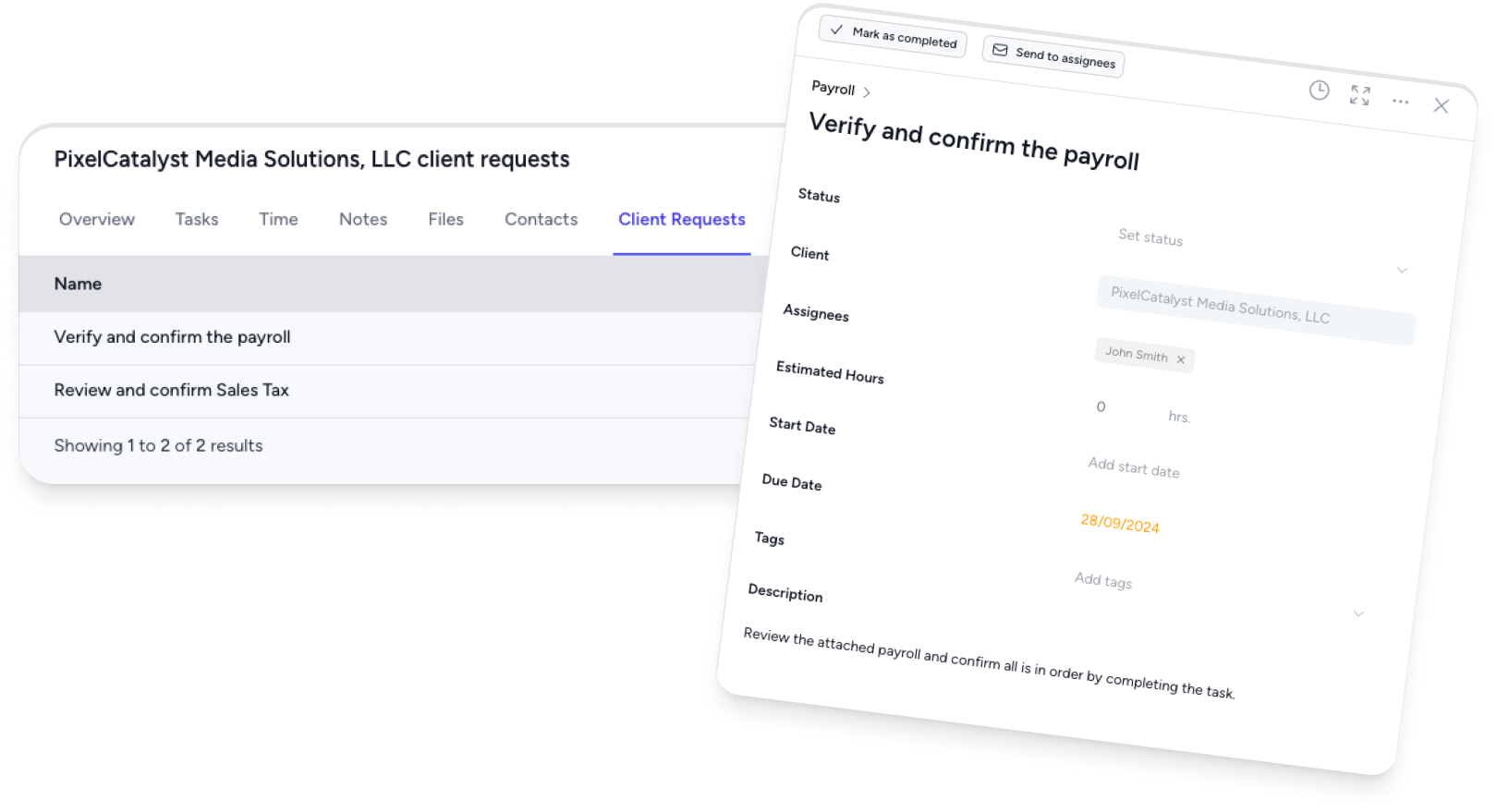
Tidyflow makes this straightforward. Create a job template for each package tier — “Growth Package - Monthly Bookkeeping” with all the subtasks, assignments, and deadlines. When you sign a new Growth client, apply the template and everything is set up. Recurring invoices match the package price. Client requests with automated reminders handle document collection. The standardization that makes productized services profitable is built into the workflow.
Common Mistakes
Too many tiers. Three tiers is enough. Five or more confuses prospects and complicates operations.
Vague scope. “Monthly bookkeeping” isn’t a scope — “up to 150 transactions, 3 bank accounts, monthly P&L and balance sheet” is. Vague scope leads to scope creep, which kills profitability.
Not enforcing boundaries. When a client on the Essentials package starts asking for advisory calls and cash flow forecasts, that’s an upgrade conversation — not free extras.
Underpricing the bottom tier. Your cheapest package still needs to be profitable. If Essentials doesn’t make money at $400/month, raise the price or cut the scope.
Never reviewing prices. Review your package prices annually. Costs go up, your team gets more efficient, and the market shifts. Adjust accordingly.
The Productization Path
- This week: List all services you deliver and group them into 3 tiers
- Next week: Price each tier using cost-plus and market comparison
- This month: Create a services page and proposal template
- Next month: Start all new clients on packages
- Over 3–6 months: Transition existing clients to the appropriate tier
Productized services don’t limit what you can do for clients — they create a clear starting point that makes it easier for clients to buy, easier for your team to deliver, and easier for your firm to grow profitably.