Try Tidyflow
Get your firm organized.
Watch a 4-minute demo, or start a free trial. No credit card required.
The way to get accounting clients is the same for a new firm and a ten-year-old practice: ask the people who already trust you, be easy to find on Google when someone searches locally, and make it simple for a stranger to book a call. Technical skill keeps clients. It does not fill the pipeline on its own.
The 10 strategies below are ordered by what usually pays off first for a small firm. After them is a section for tax practices on how to get more tax clients, including turning tax-only clients into monthly work.
1. Ask for Referrals (Start Here)
Referred clients arrive already trusting you, which makes them quicker to close and less likely to shop on price. Most firm owners still never ask directly.
How to ask:
After a good outcome, send something like this:
“Hi [Client Name], glad we could help with [specific outcome]. If you know anyone who could use similar help, I’d really appreciate the introduction. Here’s a line you can forward: ‘[Firm Name] does [service] for [client type]. They’ve been great for me. Here’s their site: [link].’”
Make it easy. Don’t ask clients to write a recommendation. Give them a sentence they can copy and paste.
When to ask: Right after a positive result: a return delivered with good news, monthly reports on time, a piece of advice that saved them money. Timing matters more than wording.
How often: Ask your best clients a few times a year, not once and never again.
2. Optimize Your Google Business Profile
When someone searches “accountant near me” or “small business accountant [city],” your Google Business Profile is what shows in the map results. It’s free, and for a local firm it’s often the biggest source of new enquiries.
Setup checklist:
- Complete every field: business name, address, phone, hours, services and description
- Add real photos of your office and team
- Choose accurate categories, such as “Accountant,” “Tax Preparation Service” and “Bookkeeping Service”
- Write a description that names your location and specialty
- Post a short update each month (a deadline reminder, a new service, a tax tip)
Reviews matter. Recent, genuine reviews help you show up and help a stranger choose you. Ask every client you’ve helped:
“Would you mind leaving us a quick Google review? It helps other business owners find us. Here’s the direct link: [link]”
Ask everyone, not just the clients you expect to be happy, and never offer a discount or gift in return. Google’s review policy prohibits both incentives and selectively asking for positive reviews.
3. Build Referral Partnerships
Other professionals talk to your ideal clients every day: financial planners, mortgage brokers, business coaches, attorneys and insurance agents.
The approach:
- List 5 to 10 professionals who serve the same clients but don’t compete with you
- Invite them for coffee or a video call
- Explain who you serve and what makes you different
- Ask who they serve and which referrals help them most
- Agree to refer clients to each other where it genuinely fits
Keep it going: Check in every quarter and send referrals first. A partner who receives clients from you remembers you when their own client needs an accountant. Tax practices get a lot from this; see partners for tax practices below.
4. Create Content That Ranks in Google
Articles that answer a specific question bring in people who are actively looking for help.
Content ideas that attract buyers:
- “How much does a bookkeeper cost in [city]?” People searching this are close to hiring
- “[Industry] tax deductions checklist.” Attracts your niche
- “How to choose an accountant for [industry or business type].” High intent
- “What to do if you missed a tax deadline.” Catches people who need help now
Each article should:
- Answer one specific question better than what already ranks
- Be genuinely useful, not a sales pitch
- End with a clear next step (“Book a free consultation”)
One solid article a month adds up to a library that keeps bringing in enquiries. For more, see our guide to marketing for accounting firms.
5. Be Active on LinkedIn
LinkedIn works for accounting firms because business owners and professionals use it.
What to post:
- Anonymized lessons from your work, with the client’s permission and no identifying details
- Practical tips tied to the calendar: “Quarterly estimates are coming up. Three things to check this week.”
- Your view on a rule change and what you’re telling clients about it
- What it’s like to work with you: how you onboard, how fast you reply, what clients get each month
Skip: Motivational quotes, awards nobody asked about, and reshared articles without your own take.
Frequency: A couple of posts a week, every week. Consistency beats the occasional viral post.
6. Network Locally and Online
Show up where your ideal clients already gather:
- Local business groups: chambers of commerce, BNI chapters, Rotary
- Industry associations: if you serve contractors, join the local builders’ association
- Online communities: small business Facebook groups, industry Slack groups and forums
- Accounting events: less for clients directly, more for referral partners
Give before you ask. Answer questions and share what you know without pitching. People hire accountants they trust, and trust comes from being useful.
7. Launch a Website That Converts
Every other channel sends people to your website. If it doesn’t turn visitors into enquiries, the rest of your effort leaks away.
Must-haves:
- A clear headline: “Bookkeeping and tax for [client type] in [location],” not “Welcome to [Firm Name]”
- Services with pricing, or at least starting-from prices
- Social proof: Google reviews and testimonials, with permission
- One clear call to action on every page: “Book a free consultation” or “Get a quote”
- Mobile-friendly and fast
You don’t need a huge blog, fancy design or a chatbot. Five clear pages beat forty vague ones.
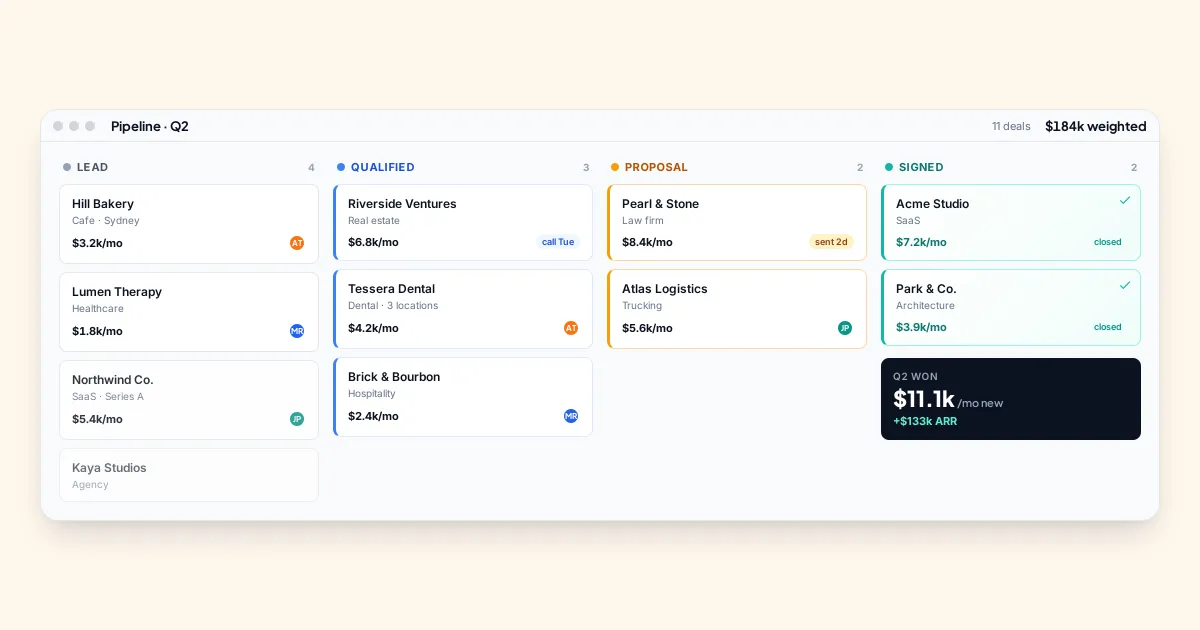
Make the enquiry step easy. If you use Tidyflow, the Get started page gives you a form at your portal address to link from a “Get started” button. Each enquiry lands in your client list as a prospect, and accepting a proposal turns them into an active client.
8. Run Google Ads When You Need Speed
If you need clients quickly (a new firm, a new niche, spare capacity), Google Ads can produce enquiries within days.
What works for accounting firms:
- Bid on high-intent searches: “small business accountant [city],” “bookkeeping services near me,” “CPA for [industry]”
- Send clicks to a dedicated landing page with one call to action, not your homepage
- Set a monthly budget you can sustain for a few months, and track cost per enquiry and cost per signed client, not clicks
Costs vary a lot by city and keyword, so judge ads on what a signed client costs you against what that client is worth each year.
Fix your website first. Paying to send people to a page that doesn’t convert is the most expensive mistake here.
9. Offer a Free Consultation
A free 15 to 30 minute call takes the risk out of the first step and lets you show how you think.
Structure the call:
- Ask about their business (2 to 3 minutes)
- Ask about their current accounting setup and what’s frustrating them (5 minutes)
- Give one piece of genuinely useful advice (5 minutes)
- Explain how you’d help and what it costs (5 minutes)
- Agree on the next step
The advice is your marketing. A prospect who leaves thinking “that was useful” is far more likely to sign. Follow up the same day with a proposal while the call is fresh.
10. Grow From Your Existing Clients
Your current clients are a growth channel beyond referrals:
Add services. A bookkeeping client probably needs tax preparation. A tax client may need bookkeeping, payroll or planning. Each added service raises revenue per client and deepens the relationship. Tax practices can do a lot here; see converting tax-only clients to monthly work below.
Serve related entities. A business owner whose company books you keep may need personal tax work. Their spouse may run a separate business. Their business partner may need an accountant.
Host client sessions. A year-end planning webinar or a short tax-law update gives clients a reason to invite peers.
How to Get More Tax Clients
Tax practices have a different rhythm: most new clients decide between January and April, and many arrive through someone who just had their return done. These tactics are aimed at getting more tax clients for a tax business or a tax and bookkeeping firm.
Ask for referrals at pickup and signing
The best moment to ask a tax client for a referral is when they see the result: when they pick up the return, sign the e-file authorization, or read the email that says it’s filed. Ask in person or in that email:
“We’re taking a few new clients this season. If a friend, family member or coworker is doing their own taxes or isn’t happy with their preparer, we’d be glad to help.”
Hand over a card or put a referral line in your filing confirmation. Clients who just had a stress-free season are your most willing advocates, and most of them know someone with a messier situation.
Turn tax-only clients into monthly clients
Your tax client list is the warmest source of bookkeeping and advisory work you have. Look for clients who:
- Bring a shoebox of receipts or a spreadsheet you have to rebuild every year
- Run a Schedule C business or rental properties
- Own an S corporation, which must pay shareholder-employees reasonable compensation through payroll before taking non-wage distributions
- Owe enough each year that they should be making quarterly estimated payments
Raise it during the return review, when the cost of messy records is fresh: “We spent hours reconstructing your books this year. For a monthly fee, we’d keep them current, handle your estimates, and you’d walk in next April with everything ready.” Put it in a written bookkeeping proposal with a clear monthly price. See pricing bookkeeping services for how to set it.
Monthly clients also smooth out your year. Revenue arrives every month instead of mostly in the spring, and you see their numbers before tax season instead of all at once.
Use Google Business Profile and reviews in season
People search for a tax preparer in late January, February and the weeks before the filing deadline. Before then:
- Check your hours, phone number and services are right, and add any extended tax-season hours
- Add “Tax Preparation Service” as a category if it isn’t already
- Post a short update when you start taking new clients and again before key deadlines
- Ask for reviews as returns go out, when clients are happiest, and keep asking through the season
When you reply to reviews, never confirm details of someone’s return or tax situation in public. Thank them and keep it general.
Partner with financial advisors, realtors and lenders
Many tax needs start with a life event: buying or selling a home, starting a business, retiring, inheriting money, getting married or divorced. The professionals who see those events first are natural referral partners:
- Financial advisors have clients with investment income, retirement distributions and estate questions
- Realtors meet first-time buyers, investors and people selling a home
- Mortgage lenders work with self-employed borrowers who need tax returns in order before they can qualify
- Estate and family attorneys handle trusts, estates and divorces that come with tax work
Offer each partner something useful in return: a one-page guide for their clients, a quick answer when they have a tax question, or a short talk at their client event.
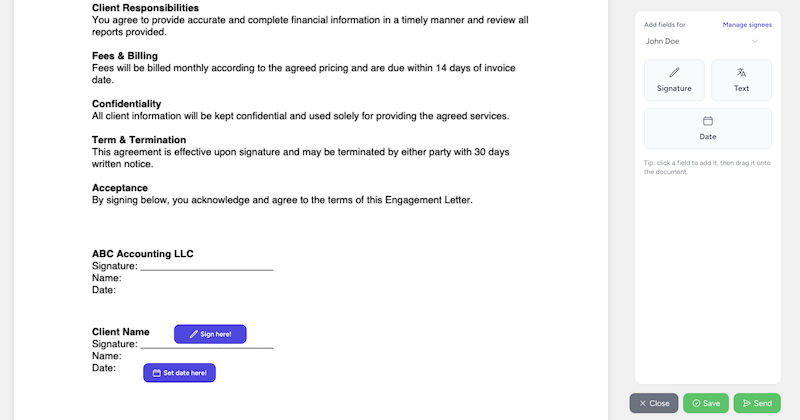
Two rules to respect. First, don’t hand a partner any client tax information. Under 26 CFR 301.7216-3, a tax return preparer needs the taxpayer’s written consent before using or disclosing tax return information, and a consent to disclose must name the recipient. Make the introduction and let the client share what they choose. Second, if you’re a CPA, check your state board’s rules and the AICPA Code (ET 1.520, commissions and referral fees) before accepting any referral fee or commission.
Pick a niche you can name in one sentence
“We do taxes for everyone” is hard to refer and hard to find. “We do tax and bookkeeping for real estate investors in [city]” is easy to remember, easy to search for, and easy for a realtor partner to pass on.
Good tax niches usually come from clients you already have: real estate investors, contractors and trades, medical and dental practices, restaurants, gig workers, clergy, or people with multi-state or expat returns. Pick one where you already have a few happy clients, then name it on your website, your Google Business Profile and in your referral asks. See accounting firm niches for how to choose.
Make room for the clients you win
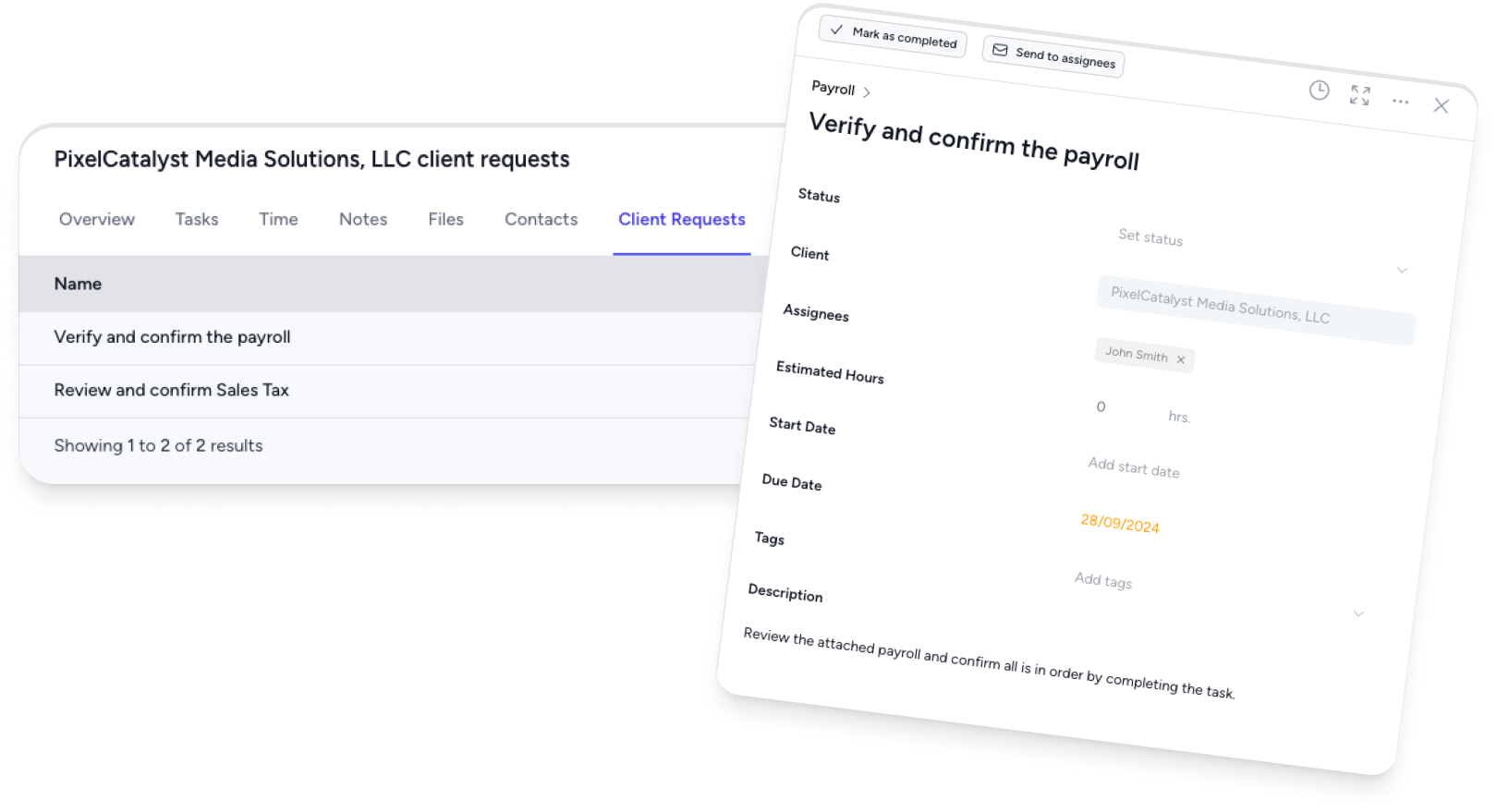
More tax clients only helps if the season doesn’t break your team. The firms that grow fastest stop chasing documents by email: they send each client an organizer and a document list early, let reminders do the follow-up, and track every return from “waiting on client” to “filed” in one place. Tidyflow’s tax organizers and client requests are built for that part of the work, alongside your tax software. See stress-free tax season for how firms set it up.
Building Your Client Acquisition System
Don’t try everything at once. Pick 2 or 3 based on where you are:
Just starting (0 to 5 clients): Referrals, Google Business Profile and your personal network
Growing (5 to 20 clients): Add content, LinkedIn and referral partnerships
Scaling (20+ clients): Add Google Ads, website improvements and a deliberate plan to add services for existing clients
Tax-heavy practices: Referral asks at pickup, reviews in season, two or three referral partners, and converting your messiest tax clients to monthly work
A simple plan you run every week beats an elaborate one you run in bursts.
Keep the Clients You Get
Winning clients takes effort. Losing them wastes it. Make sure onboarding, communication and delivery hold up:
- Client onboarding checklist: start the relationship right
- Client retention strategies: keep them long-term
- Communication tips for accountants: the thing clients notice most
Firms that keep clients well get referrals without having to ask as often.
Frequently Asked Questions
How do I get my first accounting clients?
Start with people who already know you. Tell your personal and professional network exactly who you serve, set up a complete Google Business Profile, and ask every early client for a referral and a review. Those three cost nothing and work before you have a marketing budget.
What is the fastest way to get new clients for an accounting firm?
Referrals from existing clients and referral partners usually close fastest because the trust is borrowed. Google Ads can produce enquiries within days, but only send paid traffic to a page that clearly says who you help and how to book a call.
How do I get more tax clients?
Ask for referrals when clients pick up or sign their return, keep your Google Business Profile current through tax season and ask for reviews then, build relationships with financial advisors, realtors and mortgage lenders, and choose a niche you can name in one sentence.
Can I share client information with a referral partner like a financial advisor?
Not without the client’s written consent. Under 26 CFR 301.7216-3, a tax return preparer needs the taxpayer’s written consent before using or disclosing tax return information, and a consent to disclose must identify the recipient. Make the introduction and let the client share what they choose.
How do I turn tax-only clients into monthly clients?
Look for tax clients who arrive with messy records, run a Schedule C or rental, or own an S corporation, and offer a monthly bookkeeping package during the return review, when the cost of messy books is fresh. Quarterly estimates and S corporation payroll give the offer a concrete reason.