Try Tidyflow
Get your firm organized.
Watch a 4-minute demo, or start a free trial. No credit card required.
Bookkeeping is one of the easiest professional services businesses to start. The demand is constant — every business needs someone to manage their books. The startup costs are minimal. You can work from home, set your own hours, and start with just a laptop and an internet connection.
This guide covers everything from qualifications to getting your first clients, with practical advice based on what actually works.
Do You Need Qualifications?
The Short Answer
In most countries, bookkeeping is not a licensed profession. You don’t legally need a degree or certification to start a bookkeeping business. However, credentials significantly help with credibility and getting clients.
Recommended Qualifications
Certifications that matter:
- QuickBooks ProAdvisor (free) — certifies you in QuickBooks Online; clients look for this
- Xero Advisor Certification (free) — same for Xero; essential in AU/NZ/UK markets
- Certified Bookkeeper (CB) — from AIPB (US); demonstrates professional competence
- Certified Public Bookkeeper (CPB) — from NACPB (US); requires exam and experience
- BAS Agent registration (Australia) — legally required if you prepare and lodge BAS for clients
- AAT qualification (UK) — widely recognized for bookkeepers
Minimum practical knowledge:
- Double-entry bookkeeping
- Bank reconciliation
- Accounts receivable and payable
- GST/Sales tax treatment
- Payroll basics
- Financial statement reading (P&L, Balance Sheet, Cash Flow)
- Proficiency in QuickBooks Online or Xero
If you’re starting from scratch, an online bookkeeping course plus QuickBooks Online or Xero certification is the fastest path to credibility. Most can be completed in 2–4 months of part-time study. For the full learning path and free certification options, see how to become a bookkeeper.
Step 1: Define Your Services and Niche
Don’t try to serve everyone. Start with a clear offering:
Core Services (Start Here)
- Monthly bookkeeping (categorization, reconciliation, reporting)
- Accounts receivable / invoicing management
- Accounts payable / bill payment
- Bank and credit card reconciliation
- Monthly financial reports (P&L, Balance Sheet)
Add-On Services (Once Established)
- Payroll processing
- BAS/GST/Sales tax preparation
- Cash flow management
- Cleanup / catch-up bookkeeping
- Receipt management and expense tracking
Consider a Niche
Specializing in an industry makes marketing easier and allows you to charge more:
- E-commerce sellers (Shopify, Amazon) — complex inventory and multi-channel revenue
- Restaurants and hospitality — high transaction volume, tip tracking, inventory
- Real estate — rental property accounting, multiple entities
- Trades and construction — job costing, project-based accounting
- Professional services (lawyers, consultants) — time-based billing, trust accounting
For more on choosing a niche, see our guide on accounting firm niches.
Step 2: Set Up Your Business
Legal Structure
A sole proprietorship works to start. Consider an LLC/LLP once you’re established for liability protection. Register your business name and get any required business licenses.
Business Bank Account
Open a separate business bank account immediately. Never mix personal and business finances.
Insurance
Professional liability (errors & omissions) insurance protects you if a client claims your bookkeeping caused them financial harm. Typically $300–800/year for a solo bookkeeper.
Home Office
Most bookkeepers start from home. You need:
- A reliable computer
- High-speed internet
- A quiet workspace for client calls
- A second monitor (strongly recommended — dramatically improves bookkeeping efficiency)
Startup costs:
| Item | Cost |
|---|---|
| Business registration | $50–300 |
| Insurance (E&O) | $300–800/year |
| Computer (if needed) | $500–1,500 |
| Second monitor | $150–300 |
| Software (see below) | $50–200/month |
| Website | $200–1,000 |
| Total | $1,250–4,100 |
You can start a bookkeeping business for under $2,000 if you already have a computer.
Step 3: Choose Your Software
Accounting Software (for client work)
Learn QuickBooks Online and/or Xero. Most clients use one of these. Get certified in both through their free partner programs — you’ll also get discounts and free subscriptions.
Practice Management
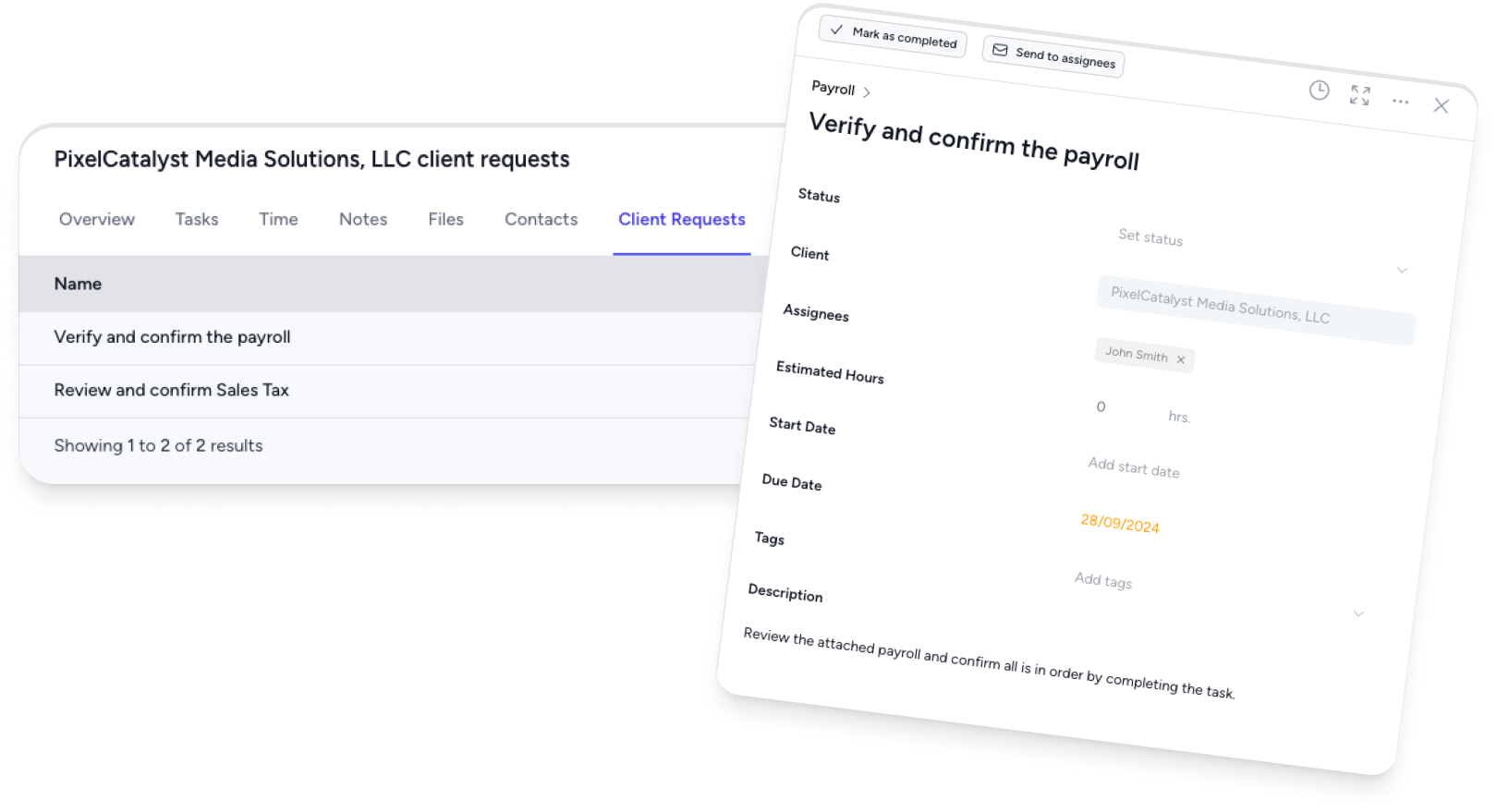
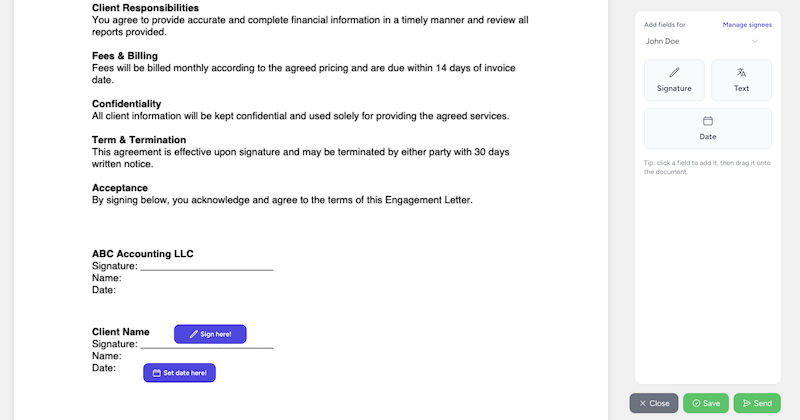
You need a system to track your clients, jobs, and deadlines. For a new bookkeeping business, Tidyflow at $39/month (or $29/month billed annually) covers job management, a client portal for document sharing, invoicing with Stripe payments, and e-signatures. It’s the most complete all-in-one option for solo bookkeepers — you won’t need separate portal, invoicing, or e-signature tools. See our tech stack guide for the full recommended setup, and free tools for bookkeepers and accountants for no-cost options while you get started.
Receipt / Document Management
Dext (formerly Receipt Bank) or Hubdoc automate receipt and invoice capture. Your clients photograph receipts, and the tool extracts the data and feeds it into QuickBooks Online or Xero. This saves hours per client per month.
Step 4: Set Your Pricing
Pricing Models
Fixed monthly fee (recommended): Charge a set monthly price based on transaction volume and complexity. This is what most successful bookkeeping businesses use.
Hourly rate: Simple but penalizes efficiency. Use only for cleanup/catch-up work.
Pricing Benchmarks
| Client Type | Transactions/Month | Monthly Price |
|---|---|---|
| Sole trader / freelancer | Under 50 | $250–400 |
| Small business (1–5 employees) | 50–150 | $400–800 |
| Growing business (5–20 employees) | 150–500 | $800–1,500 |
| Mid-size business (20+ employees) | 500+ | $1,500–3,000+ |
Pricing add-ons:
- Payroll: +$100–300/month depending on employee count
- BAS/GST lodgement: +$100–200/quarter
- Cleanup/catch-up: $75–150/hour
For detailed pricing guidance with real benchmarks and package examples, see our guide to pricing bookkeeping services.
Step 5: Get Your First Clients
The First 5 (Personal Network)
Your first clients almost always come from people you know:
- Tell everyone — friends, family, former colleagues, social media
- Offer a “founding client” rate (modest discount in exchange for a testimonial later)
- Join local business groups (chambers of commerce, BNI, Facebook groups)
- Reach out to sole traders and small businesses in your network directly
The Next 10 (Systematic Marketing)
- Google Business Profile — set up, optimize, collect reviews from your first clients
- Simple website — who you serve, what you offer, pricing, and a contact form
- LinkedIn — share bookkeeping tips, tax reminders, and business insights regularly
- Referral partnerships — connect with accountants (they often refer bookkeeping work), financial planners, and business coaches
From 15+ (Content and Referrals)
- Write 1–2 blog posts per month targeting searches like “bookkeeper for [industry] in [city]”
- Ask every happy client for a referral
- Consider Google Ads ($500–1,000/month) if you need clients quickly
For a deeper dive, see our guide on getting more accounting clients.
Step 6: Onboard Clients Properly
A smooth onboarding process sets the tone. For each new client:
- Send an engagement letter (use our template)
- Collect their information (business details, accounting software access, bank accounts)
- Set up their portal access
- Create their recurring jobs in your practice management software
- Set up recurring invoicing
- Send a welcome email with expectations (what you need, when, how to send it)
See our client onboarding checklist for the full process with templates.
Step 7: Systemize and Grow
Build Processes Early
Even as a solo bookkeeper, document your processes:
- Standard bookkeeping workflow (step-by-step for each client’s monthly work)
- Client onboarding checklist
- Document request checklist per service type
- Month-end closing checklist
These processes become critical when you hire your first employee or contractor.
Know When to Raise Prices
If you’re consistently working more hours than your pricing allows, your prices are too low. Review pricing every 6–12 months and increase where needed. See our guide on fee increase letters for templates.
Know When to Hire
Hire when you’re consistently turning away work or working 50+ hours/week. Your first hire is typically a part-time bookkeeper who takes over production work so you can focus on client relationships and growth.
Revenue Potential
| Milestone | Clients | Revenue (Approx.) |
|---|---|---|
| Part-time (side hustle) | 5–10 | $15,000–50,000/year |
| Full-time solo | 15–30 | $60,000–150,000/year |
| Solo + 1 employee | 30–50 | $150,000–300,000/year |
| Small team (3–5) | 50–100 | $300,000–750,000/year |
Bookkeeping businesses are highly scalable because the work is recurring and systematizable. Each additional client adds predictable monthly revenue with known delivery costs.
Find Coaching and Community
You do not have to figure this out alone. Bookkeeping has an unusually generous community and coaching ecosystem:
- Free peer communities — Reddit (r/Bookkeeping), the QuickBooks Online Accountant community, and niche Facebook groups are good for quick questions and referrals.
- Coaching memberships — Future Firm (for accounting firm owners), The Successful Bookkeeper, Bookkeepers.com, and Ambitious Bookkeeper focus on the business side of running a practice.
- Free business mentoring — In the US, SCORE offers free mentoring for any small business, including bookkeeping firms.
For a full breakdown of where to find peers, referrals, and mentors, see the best communities for accountants and bookkeepers.
Frequently Asked Questions
Do you need qualifications to start a bookkeeping business?
In most countries you do not legally need a qualification or license to start a bookkeeping business. Credentials like a QuickBooks ProAdvisor or Xero advisor certification, or the AIPB Certified Bookkeeper and NACPB licenses in the US, build credibility and skills but are optional. Preparing or filing tax returns for clients is the exception and often requires a separate credential.
How much does it cost to start a bookkeeping business?
You can start for under $2,000 if you already have a computer. The main costs are business registration ($50–300), professional liability insurance ($300–800/year), and software ($50–200/month). You can learn the skills with free training, so software and insurance are usually the only fixed costs.
How do I get my first bookkeeping client?
Most first clients come from your existing network — former colleagues, local small businesses, and referrals from accountants who do not offer bookkeeping. Pick a niche, tell everyone exactly who you help, and offer a founding-client rate or a paid clean-up to get started.
Is a bookkeeping business profitable?
Yes. Because costs are low and the work is recurring, bookkeeping businesses can be highly profitable, especially with fixed monthly packages. A full-time solo bookkeeper typically earns $60,000–150,000/year, and firms that hire scale well beyond that.
How long does it take to start a bookkeeping business?
You can be registered and ready for a first client in a few weeks. Building to a full-time income usually takes six to eighteen months, depending on your niche, your network, and how consistently you market. The setup is fast; the client base is what takes time.
Start This Week
- Get QuickBooks Online or Xero certified (free, takes a few hours)
- Register your business and open a bank account
- Set up Tidyflow for practice management ($39/month, or $29/month billed annually)
- Build a simple one-page website
- Tell 20 people you’ve started a bookkeeping business
- Land your first client
The biggest barrier isn’t skill or capital — it’s starting. The demand for good bookkeepers is enormous and growing. Every hour you delay is revenue you’re leaving on the table.