Try Tidyflow
Get your firm organized.
Watch a 4-minute demo, or start a free trial. No credit card required.
A CRM for accountants isn’t really a sales tool, it’s the client hub your firm works from. This guide explains what a CRM actually does for an accounting firm, why generic sales CRMs are a poor fit, and what to look for when you choose in 2026.
What a CRM does for an accounting firm
CRM stands for customer relationship management, and in most industries that means managing a sales pipeline. Accounting firms are different: your relationships are long-term and recurring, not a series of one-off deals. What you actually need is a single, reliable place that holds:
- Every client’s entity and contact details
- The full history of your communication with them
- Their documents and files
- The work you’re doing for them, and what’s due next
When all of that lives in one place and stays current, you can answer any client question in seconds and nothing falls through the cracks. That’s the real job a “CRM” does for a firm.
Generic sales CRM vs client management for firms
It’s tempting to reach for a well-known CRM like HubSpot or Salesforce. The problem is they’re built for sales teams chasing deals, not firms delivering recurring compliance and advisory work. A generic CRM has no concept of a client’s jobs, statutory deadlines, document requests, or a secure client portal, so you pay for pipeline features you’ll never use and still manage the real work in another tool.
That split, contacts in the CRM, work somewhere else, is exactly the disconnect that makes client information go stale. The firms that get the most value keep the client record attached to the work.
What accounting firms actually need from a CRM
- A central client record with entity type, registration numbers, and key dates, not just a name and email.
- Contact management for everyone you deal with at a client, and their role.
- Communication history so any team member can see what’s been said without digging through inboxes.
- Documents in one place, attached to the client rather than scattered across drives and emails.
- A client portal so requests, approvals, and files happen securely with the client instead of over email.
- A link to the work, the client’s jobs, tasks, and deadlines, so the record reflects what’s actually happening.
How Tidyflow handles client management
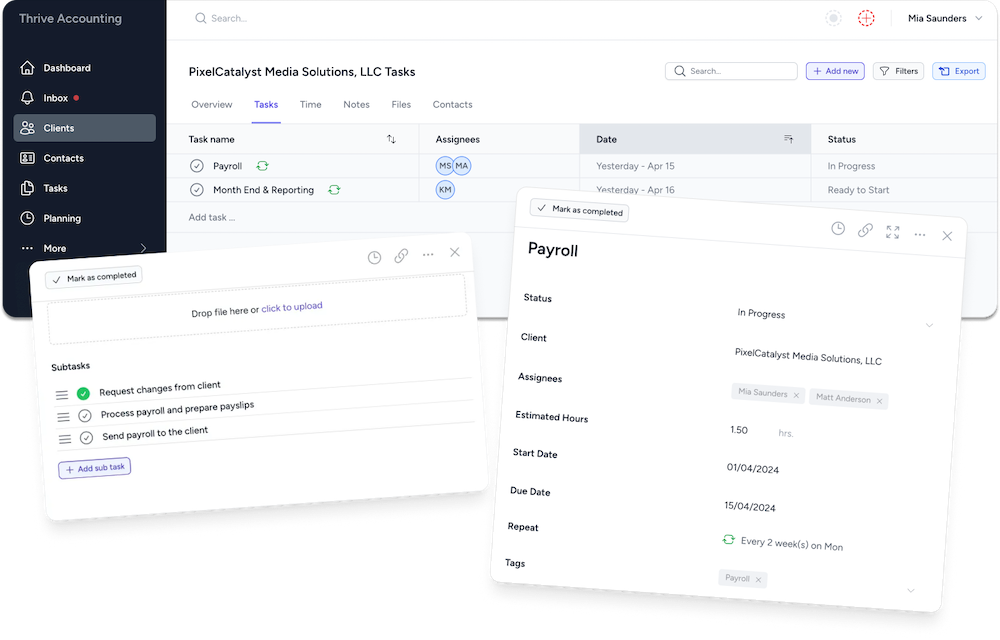
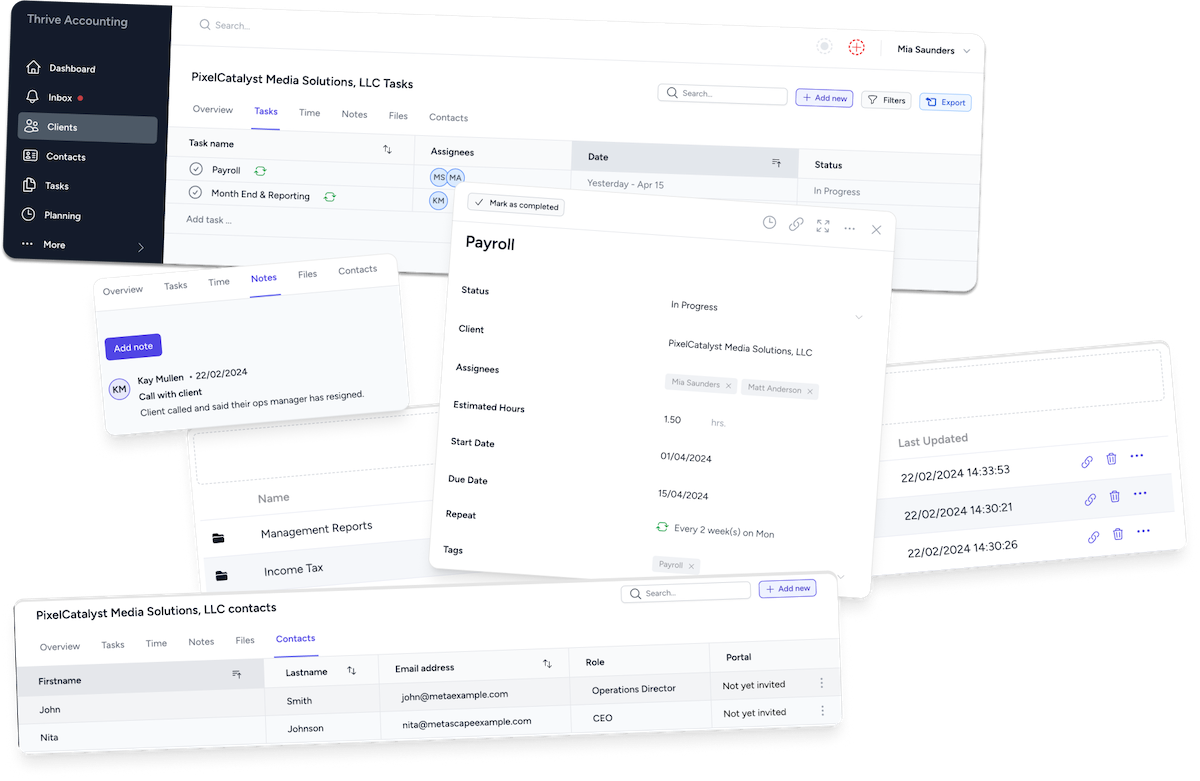
Tidyflow treats the client record as the hub the whole firm works from. Client management keeps entity details, contacts, and history in one place, the client portal and requests move document collection and approvals out of email, and, because it’s part of a full practice management platform, the client record is connected to the jobs, deadlines, and billing rather than sitting in a separate sales tool. When you onboard a new client, everything you collect lands against that record from day one.
How to choose a CRM for your accounting firm
- Decide what problem you’re solving. If it’s “our client information is scattered,” you need client management, not a sales pipeline.
- Check it understands the work. Can the client record link to jobs, deadlines, and documents, or is it just contacts?
- Look for a client portal. Secure document exchange with clients is where most firms feel the pain.
- Confirm the integrations you rely on, especially QuickBooks Online or Xero.
- Weigh a standalone CRM against an integrated platform. A separate CRM adds another system to keep in sync; an integrated platform keeps the client record and the work in one place.
Frequently asked questions
Do accountants really need a CRM?
Most firms need client management more than a traditional sales CRM: one place that holds every client’s details, contacts, communication history, documents, and the work you’re doing for them, connected to the actual jobs.
Can I use a generic CRM like HubSpot or Salesforce for my firm?
You can, but generic sales CRMs are built for pipelines and deals, not recurring compliance work. They have no concept of a client’s jobs, deadlines, documents, or a secure client portal.
What’s the difference between a CRM and practice management software?
A CRM manages relationships and contact data; practice management software manages relationships and the work, jobs, tasks, documents, time, billing, and a client portal. Most firms only get value when the client record is attached to the work.
What should a CRM for accountants include?
A central client record with entity and contact details, full communication history, document storage, a secure client portal, and a live link to the jobs and deadlines you’re working on.