Try Tidyflow
Get your firm organized.
Watch a 4-minute demo, or start a free trial. No credit card required.
Every return your firm prepares that claims the earned income tax credit, the child tax credit, the American opportunity tax credit or head of household status comes with a legal homework assignment: paid preparer due diligence. Get it wrong and the IRS can assess a penalty for each missed credit on each return, and in some cases against the firm as well as the preparer.
The rules are not complicated, but they are easy to skip in the middle of March. This guide explains what the law requires, then gives you a tax preparer due diligence checklist you can run on every return, and shows how to build it into your intake and workflow so it happens without anyone remembering to do it.
This is general guidance for firms, not legal or tax advice. The IRS Instructions for Form 8867 are the authority.
What is paid preparer due diligence?
Section 6695(g) of the Internal Revenue Code imposes a penalty on paid preparers who fail to meet the due diligence requirements set out in Treasury Regulation 1.6695-2. Form 8867, the Paid Preparer’s Due Diligence Checklist, is how you show the IRS you met them.
The requirements apply when you prepare, for pay, a return or claim for refund that claims any of these:
- EITC: the earned income tax credit
- CTC/ACTC/ODC: the child tax credit, additional child tax credit or credit for other dependents
- AOTC: the American opportunity tax credit
- HOH: head of household filing status
They apply to signing preparers and to nonsigning preparers who determine eligibility for, or the amount of, a covered benefit. A signing preparer submits Form 8867 with the return. A nonsigning preparer gives the completed form to the signing preparer.
The four due diligence requirements
The regulation lists four requirements. Meet all four on every covered return.
1. Complete and submit Form 8867
Complete Form 8867 based on information the client gave you or that you otherwise reasonably obtained or knew. If you e-file the return, Form 8867 is filed with it. If you are the signing preparer on a paper return, give it to the taxpayer to attach. Form 8867 is required for every return or refund claim you prepare that claims a covered benefit, not only the ones that look risky.
2. Compute the credits
For each credit claimed, complete the applicable IRS worksheet (for example, the EIC worksheet in the Form 1040 instructions) or your own record of the computation and the information used. Most tax software produces these worksheets. Your job is to make sure the inputs behind them are right.
3. Meet the knowledge requirement
You must not know, or have reason to know, that any information you used to claim the credit or HOH status is incorrect. If a reasonable, well-informed preparer would find a client’s information incorrect, inconsistent or incomplete, you must ask enough additional questions to resolve it, and document those questions and the client’s answers at the time you ask them.
Typical triggers:
- A 22-year-old claiming two qualifying children who are 10 and 11
- Schedule C income that lands exactly where the EITC is largest, with no records
- A client claiming HOH who is still married and you do not know whether the spouse lived in the home during the last six months of the year
- A Form 1098-T that does not match what the client says they paid for tuition (the AOTC is based on what was actually paid during the year)
- A child who might also be claimed by another parent or relative
4. Keep records for three years
Keep these five types of records:
- A copy of the completed Form 8867
- The credit computation worksheets, or your own computation record
- Copies of any documents the client provided that you relied on
- A record of how and when you got the information, and who gave it to you
- A record of any additional questions you asked and the client’s answers
Keep them for three years from the latest of the return’s original due date (not counting extensions), the date you e-filed it as signing preparer, the date you presented a paper return to the taxpayer for signature, or, for a nonsigning preparer, the date you submitted your work to the signing preparer. The regulation allows paper or electronic records.
The due diligence penalty for 2026
For a return or claim for refund filed in 2026, the penalty is $650 per failure. Because it applies to each covered benefit, one return claiming the EITC, CTC, AOTC and HOH status can carry up to $2,600. The figure is adjusted for inflation every year, so check IRS.gov/Form8867 before each season.
The penalty is not the only consequence. The IRS also lists suspension or expulsion from IRS e-file, discipline by the Office of Professional Responsibility, an injunction barring you from preparing returns, and criminal penalties for fraudulent returns.
The firm can be penalized too. Under the regulation’s special rule for firms, a firm that employs a penalized preparer is also liable if management participated in or knew of the failure, if the firm failed to establish reasonable and appropriate compliance procedures, or if it disregarded its procedures through willfulness, recklessness or gross indifference.
There is a limited exception for preparers. No penalty applies if the preparer shows that their normal office procedures are reasonably designed and routinely followed to ensure compliance, and the failure was isolated and inadvertent. That exception is a strong reason to write your procedures down and follow them every time.
Tax preparer due diligence checklist
Use this per return. It follows the order work actually happens in a small firm: intake, documents, preparation, review, filing and retention. It is a working aid, not a substitute for Form 8867 itself.
At intake
- Ask filing status questions: marital status at year-end, and for married clients whether the spouse lived in the home during the last six months of the year
- List everyone who lived in the home, with relationship, age, months lived there, and whether they were a full-time student or permanently disabled
- Ask who paid the household costs (rent or mortgage, utilities, food) and roughly how much
- Ask whether anyone else (the other parent, a grandparent) could claim any of the children, and whether a Form 8332 release is in place
- Ask whether the IRS denied or reduced any EITC, CTC/ACTC/ODC or AOTC claim in a prior year (if so, Form 8862 may be required)
- For self-employment income, ask what records support it
- For education credits, ask what was actually paid during the year and by whom
- Confirm SSNs for qualifying children, and for the taxpayer where the credit requires it
Documents to request
- Residency evidence for each qualifying child (for example school, medical, childcare or lease records)
- Form 8332 or the custody documents, where relevant
- Form 1098-T plus receipts or statements showing tuition and related expenses actually paid
- Business records for Schedule C income and expenses (invoices, bank statements, a ledger)
- Evidence of household costs for HOH, if anything looks unclear
During preparation
- Complete the IRS worksheet for each credit claimed
- Compare the answers against the documents. Note anything that is incorrect, inconsistent or incomplete
- Ask follow-up questions and record each question, the client’s answer, the date, and who answered
- If the answers still do not support the claim, do not claim it
At review
- Reviewer confirms Form 8867 is complete and every answer matches the file
- Reviewer checks that follow-up questions were asked and documented
- Confirm Form 8867 is included in the e-file submission
After filing
- Save Form 8867, the worksheets, the documents relied on, and the question-and-answer record to the client’s file for that year
- Record the dates that start the three-year retention clock
- Do not delete the file before the retention period ends
How to make due diligence part of the workflow
The firms that get penalized are rarely the ones that do not know the rules. It is usually a busy preparer, a client who sent half the documents, and a return that went out before the follow-up questions were written down. The fix is to make the steps happen by default.
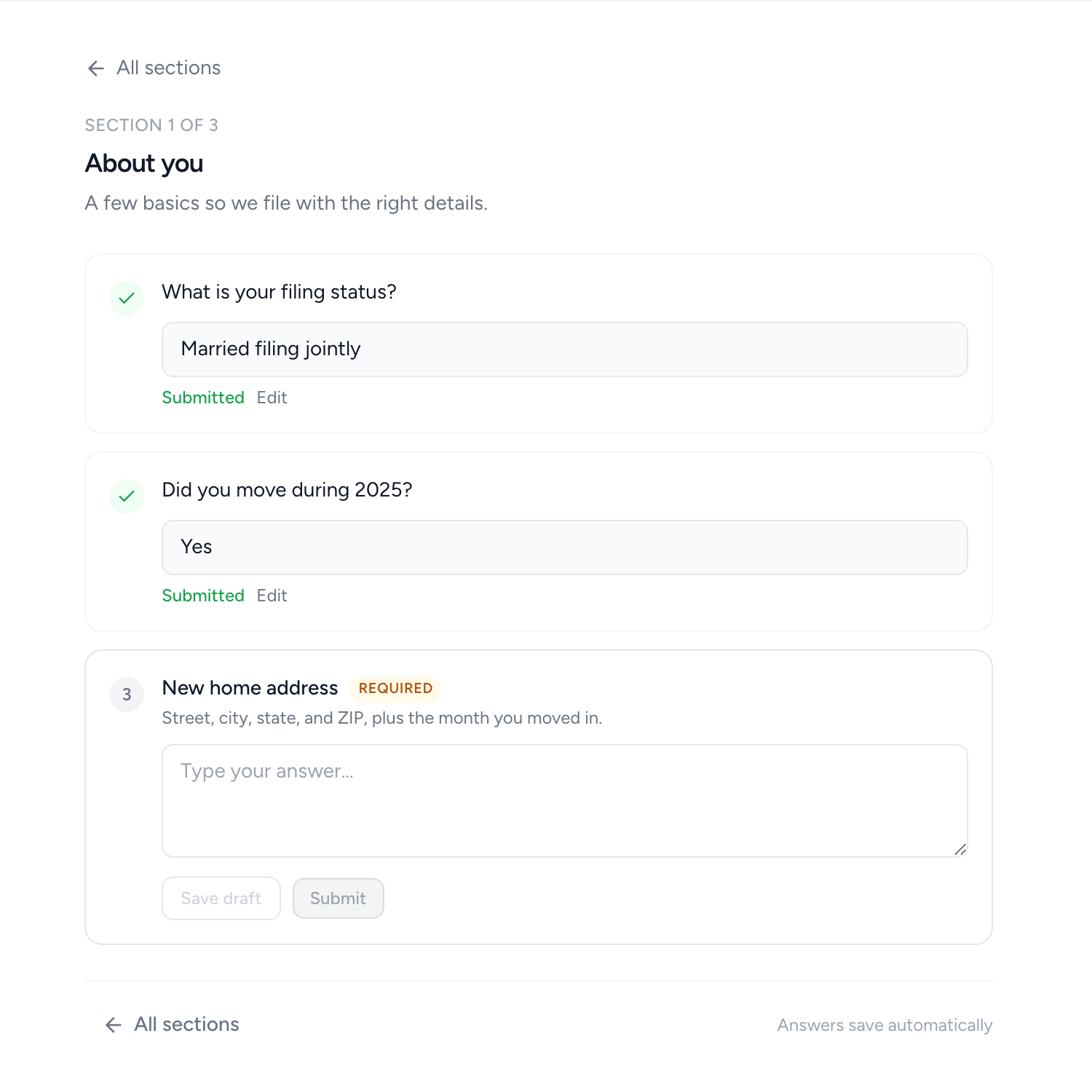
Put the questions in the organizer. The cheapest place to meet the knowledge requirement is intake. Add household, residency, custody, prior-year disallowance and education payment questions to your tax organizer, so the answers arrive in writing, dated, from the client. Follow-up questions for edge cases still need your own notes, but the baseline is captured before preparation starts.
Request the documents in the same place. Ask for residency records, Form 1098-T and Schedule C records as specific items, not a general “send everything.” You can see what has arrived and what is still missing per client.
Add a due diligence section to the return checklist. Every return job should carry the same steps: worksheets completed, inconsistencies resolved and documented, Form 8867 reviewed, records saved. A checklist on the job makes skipping a step visible to the reviewer.
Document follow-ups where the work happens. Record the follow-up question and answer on the return’s job, with the date and who you spoke to, not in a preparer’s personal email or a sticky note.
Save everything to one client file. The retention requirement is easier to meet when Form 8867, the worksheets, the client’s documents and the question log live in one folder per client per year.
Write down the procedure. A short written procedure that every preparer follows protects the firm under the special rule for firms, and supports the isolated-and-inadvertent exception for an individual preparer. Our guide to documenting accounting firm processes covers how to write SOPs your team will use.
How Tidyflow helps
Tidyflow is not tax software and does not complete Form 8867 for you. It runs the work around the return, which is where due diligence usually breaks down.
- Tax organizers start from ready-made US organizers, including Form 1040, which you can edit to add your due diligence questions. On Pro, conditional questions show the dependent, custody and education sections only to clients they apply to. Clients review a recap of every answer and sign off by typing their name, and the completed organizer exports to PDF with the sign-off recorded, ready for your workpapers.
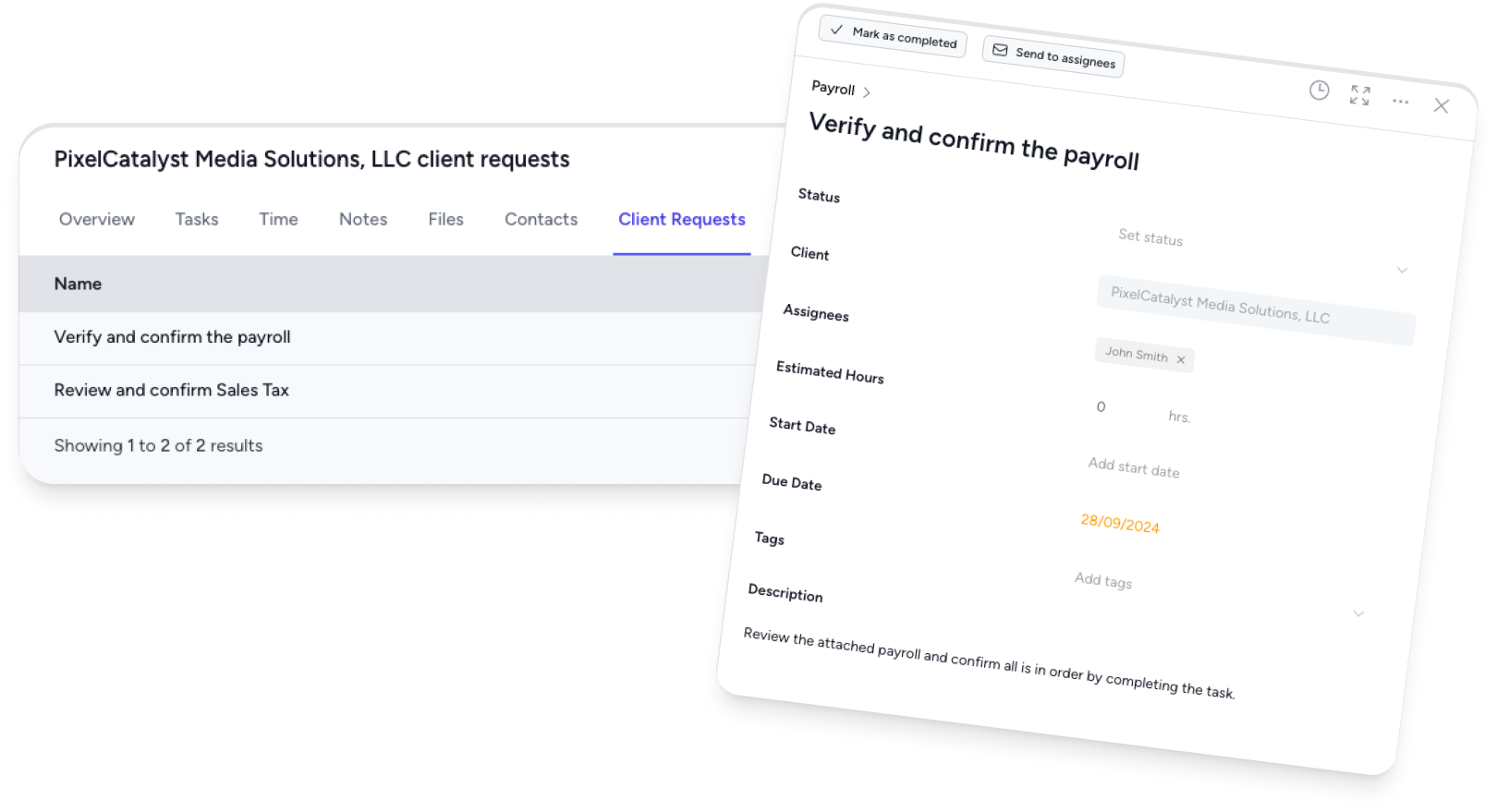
- Client requests ask for specific documents, such as residency records and Form 1098-T, alongside the questions. Clients upload without a login, files land in the right client folder, and reminders go out on the cadence you set until the items arrive.
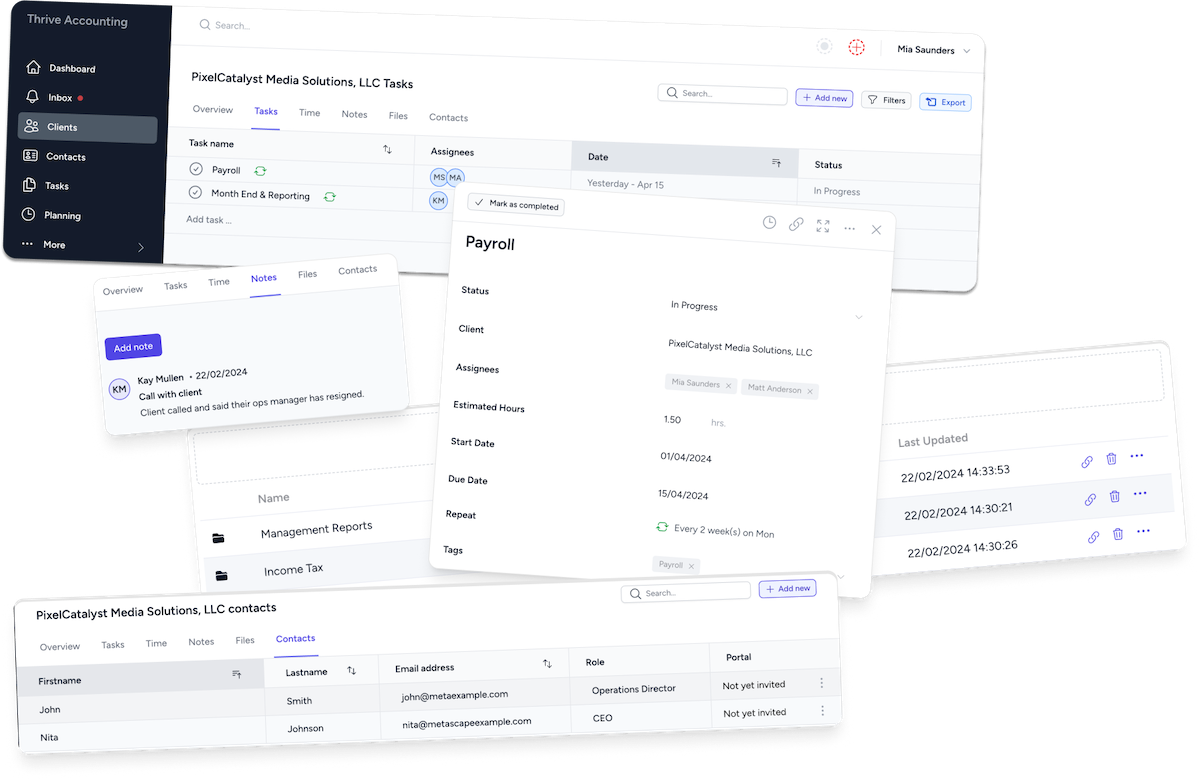
- Job templates carry the same due diligence checklist on every return. Group subtasks under headings like preparation, review and filing, assign each step, and deploy the template to every tax client at once.
- Job comments keep follow-up questions and the client’s answers on the return itself, timestamped and visible to the reviewer.
If you are setting up for next season, start with the free 1040 tax organizer template and add the intake questions from the checklist above.
Frequently asked questions
What is paid preparer due diligence?
It is a set of requirements under Internal Revenue Code section 6695(g) and Treasury Regulation 1.6695-2 that paid preparers must meet on any return claiming the EITC, CTC/ACTC/ODC, AOTC or head of household filing status. The preparer must complete and submit Form 8867, compute the credits, meet the knowledge requirement and keep records.
What is the due diligence penalty for returns filed in 2026?
$650 per failure for a return or claim for refund filed in 2026. Because the penalty applies to each covered credit or status, one return claiming all four can carry up to $2,600. The amount is adjusted for inflation each year, so check IRS.gov/Form8867 for the current figure.
How long do I have to keep due diligence records?
Three years from the latest of the return’s original due date (without extensions), the date a signing preparer e-filed it, the date a paper return was presented to the taxpayer for signature, or, for a nonsigning preparer, the date the work was submitted to the signing preparer. Records can be kept on paper or electronically.
What records does Form 8867 due diligence require?
A copy of Form 8867, the credit computation worksheets (or your own record of the computation), copies of any documents the client gave you that you relied on, a record of how, when and from whom you got the information, and the extra questions you asked with the client’s answers.
Can my firm be penalized for an employee’s due diligence failure?
Yes, in some cases. Under Treasury Regulation 1.6695-2(c), the firm is also liable if management participated in or knew of the failure, if the firm did not have reasonable compliance procedures, or if it disregarded its own procedures through willfulness, recklessness or gross indifference.
Does due diligence apply to every client?
Only to returns or refund claims you prepare for pay that claim the EITC, CTC/ACTC/ODC, AOTC or head of household status. It does not apply to volunteers or to returns that claim none of those benefits.