Try Tidyflow
Get your firm organized.
Watch a 4-minute demo, or start a free trial. No credit card required.
The sticker price of practice management software is the easy part. The true cost, and the true value, is everything around it: the add-ons, the onboarding, the switching, and the cost of carrying on without it. This guide breaks down what accounting firms actually pay in 2026, and how to weigh it.
What practice management software actually costs
Most tools price per user, per month, commonly $30 to $70, with tiers that gate features. A small firm usually lands somewhere between $1,000 and $5,000 a year once you count every seat, but the headline per-seat number rarely matches the invoice. Two firms of the same size can pay very different amounts depending on which features they need and how the vendor packages them.
The hidden costs
The price you’re quoted and the price you pay diverge for a few predictable reasons:
- Per-user scaling. Every hire adds a seat. Fast-growing firms feel this most.
- Feature gating. The plan you actually need, client portal, billing, automation, is often a tier or two above the one in the ad.
- Paid add-ons. Client portal, e-signatures, extra storage, and integrations are frequently sold separately.
- Onboarding and implementation fees. Some vendors charge to get you set up or migrate your data.
- Integration costs. Connecting your ledger, email, or e-sign tool can carry its own price.
- Annual increases. The renewal is rarely the intro rate.
The fix is simple: ask for the all-in annual number for your team size, on the plan you’d genuinely use, not the headline per-seat price.
The cost of not having it
The most expensive option is usually the status quo, it’s just hidden in your team’s time. Spreadsheets, shared inboxes, and mental checklists cost you in:
- Hours spent chasing documents and re-keying data between tools
- Time lost answering “what’s the status of that client?”
- Missed or last-minute deadlines, and the client trust that goes with them
- Capacity you can’t see, so work piles on the wrong people
If a tool saves each team member even a few hours a week, it typically pays for itself long before you notice the subscription. Our ROI calculator puts real numbers against this.
The cost of switching
There’s also a cost to choosing wrong: migrating data, retraining the team, and the disruption of moving mid-year. That’s an argument for evaluating carefully up front, not for avoiding software, and for favouring a tool your team will actually adopt over the one with the longest feature list. See our guide to the best practice management software for how to compare.
How to weigh the true cost
- Get the all-in number for your team size and real plan, including add-ons and onboarding.
- Estimate the time you’ll get back, chasing documents, status updates, re-keying, and price it at your team’s hourly cost.
- Count the deadlines and clients better systems help you keep.
- Check what scales, per-user pricing and tier jumps as you grow.
- Weigh adoption, a cheaper tool no one uses is the most expensive of all.
How Tidyflow approaches pricing
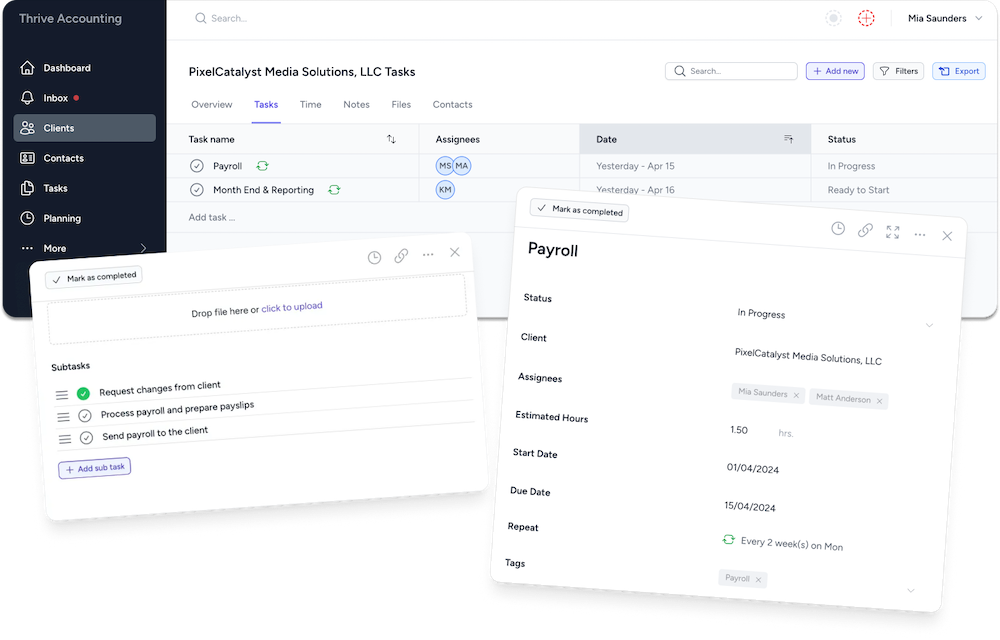
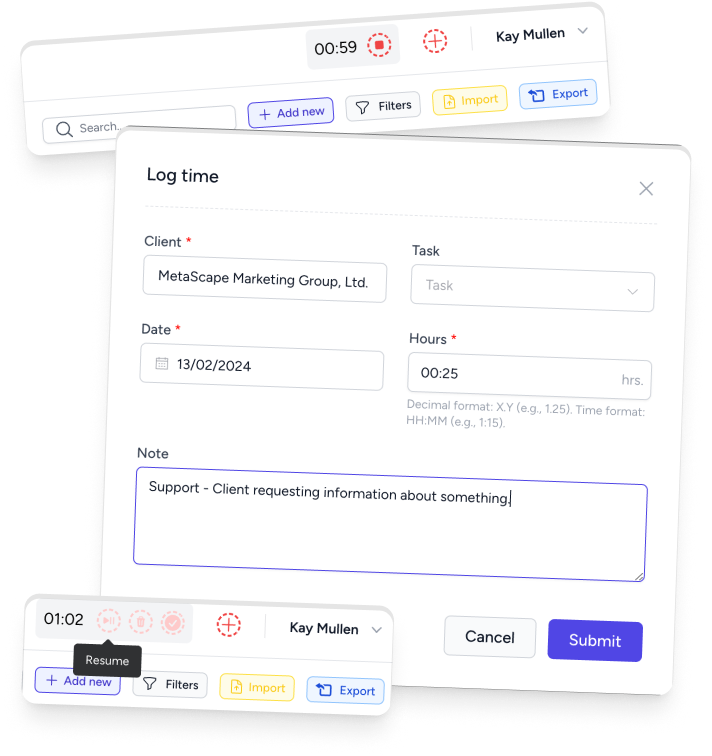
Tidyflow bundles the things other tools sell as add-ons, workflow, client management, a client portal, document collection, time and billing, into one plan, so the all-in cost is the price you see rather than a base fee plus a stack of extras. You can see the details on the pricing page, and model the time saved with the ROI calculator.
Frequently asked questions
How much does practice management software cost?
Most tools price per user per month, commonly $30 to $70, with tiers that gate features like client portals, billing, or automation. A small firm often lands between $1,000 and $5,000 a year all-in, but add-ons, onboarding, and integrations move the real number.
Is it worth it for a small firm?
Usually yes, once you’re past a handful of clients with recurring work. The value is the admin time you get back and the deadlines you stop missing; if the tool saves each person a few hours a week, it tends to pay for itself quickly.
What hidden costs should I watch for?
Per-user scaling, feature gating, paid add-ons (client portal, e-signatures, storage), onboarding fees, integration costs, and annual increases. Ask for the all-in number for your team size and the plan you’d actually use.
How do I calculate ROI?
Estimate the hours spent chasing documents, tracking status, and re-keying data, multiply by hourly cost, and compare to the annual price plus onboarding, then add the value of deadlines kept and clients retained.