Accounting practice valuation, the way owners actually meet it, is a question about price. What would a buyer, a partner, or an internal successor pay for the right to keep serving these clients and collecting these fees once you are no longer in the middle?
The short answer: they pay for fees they believe will continue, discounted for anything that makes those fees fragile. Recurring revenue quality, how involved you still are, the client mix, and whether the work sits in a system or in your head are the levers you can see from the owner’s chair. A multiple of revenue is shorthand people use after those facts are known.
This article is education, not a valuation, a fairness opinion, or advice to sell. What a specific practice is worth depends on facts this page does not have. Before you rely on a number, talk with a qualified valuator and your own legal and tax advisers.
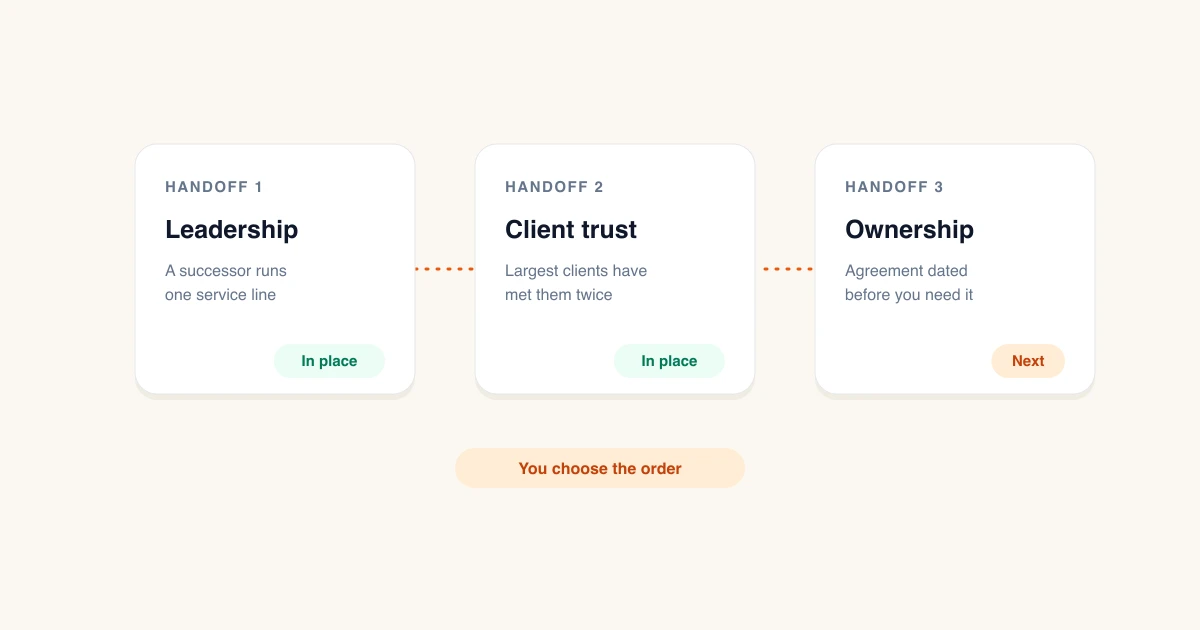
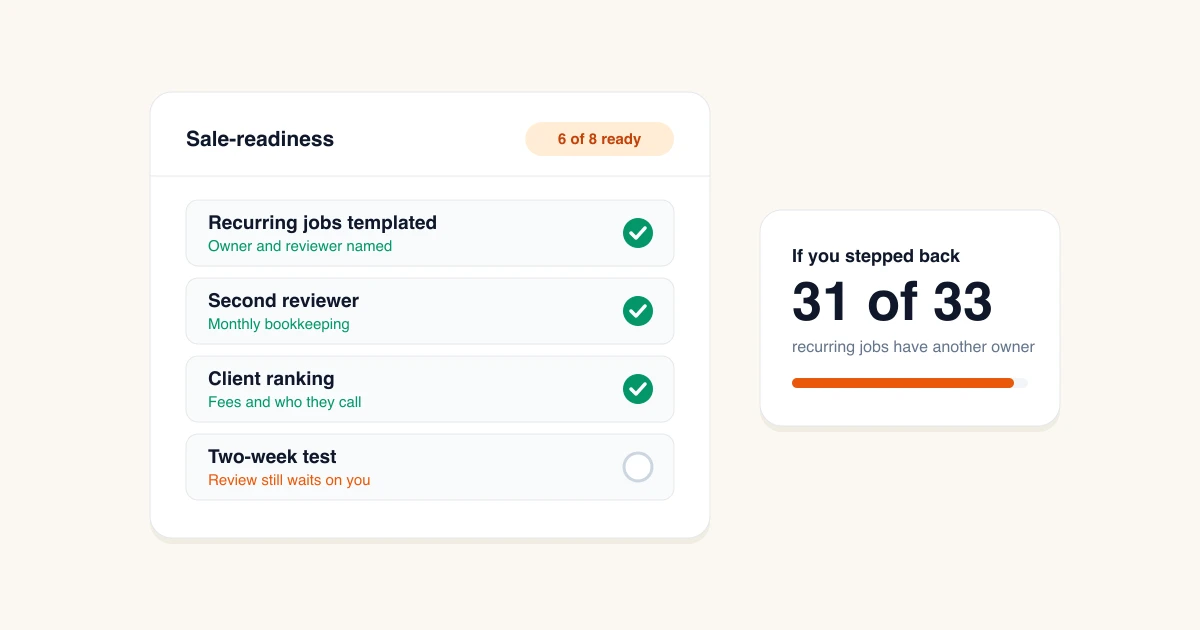
Tidyflow does not broker practices. The operational work that makes a practice easier to price is the same work that makes it easier to run, and the sale-readiness checklist lays it out as a list. If the real question is when and how you step back, start with accounting firm succession planning.
Price and a formal valuation are different jobs
Owners use “what’s it worth?” to mean at least three things.
A deal price is what a buyer will pay, on specific terms, for this practice at this time. It moves with how the payments are structured, how long you help with the transition, and what happens if clients leave.
An internal transfer price is what a partnership agreement, or a conversation you still need to have, says a retiring owner receives from the people who helped build the firm. The buyers are not strangers, and the firm may already be obligated to buy the interest, so it is usually a different number from an outside sale.
A formal valuation is a conclusion prepared under valuation standards for a stated purpose, such as estate planning, a dispute, or a tax filing. A CPA Accredited in Business Valuation (ABV) works in that lane. A conversation about “times revenue” usually does not.
Joel Sinkin and Terrence Putney, CPA, drew that line in a Journal of Accountancy article, “Pricing issues for small firm sales.” In a sale, they wrote, value means the price paid, often expressed as a multiple of revenue, and it is not what an ABV holder would conclude in a formal valuation. The article dates from 2014 and its market figures have aged, but the distinction holds. If someone quotes you a multiple, ask whether they mean a deal, an internal formula, or a formal opinion.
What small practices sell for now
The most current public data for small US practices comes from BizBuySell, a business-for-sale marketplace. Its accounting and tax practice benchmarks cover practices reported sold through it from 2021 to 2025:
| Measure | Lower quartile | Median | Upper quartile |
|---|---|---|---|
| Sale price to revenue | 0.92 | 1.02 | 1.17 |
| Sale price to owner’s discretionary earnings | 1.61 | 2.04 | 2.66 |
Over the same period the median sale price was $425,000 and median revenue was about $400,000. In 2025 alone, the average revenue multiple was 1.11 and the median sale price was $500,000.
Read those numbers for what they are:
- Mostly owner-run practices. BizBuySell describes them as primarily small businesses owned and operated by a CPA. Multi-partner firms and private-equity deals are usually priced on earnings and are not what this table describes.
- Headline prices. The table does not show how much was paid at closing, how long the payout ran, or how much was clawed back when clients left.
- A spread, not a number. BizBuySell’s own reading is that consistent performance, low owner involvement, and a seller willing to finance push a practice toward the upper quartile. Thin margins and full-time owner involvement push it toward the lower one.
That last point is the useful one. The gap between 0.92 and 1.17 times revenue on a $400,000 practice is about $100,000, and most of what moves a practice across it is in the rest of this guide.
Why the multiple moves
People quote revenue multiples because the top line is easy to see and, in many small practices, profit is tangled up with owner pay. The multiple compresses everything hard about the practice into one number. That is why two practices with the same fees can sell at different multiples, and why the same multiple on different terms is a different deal.
Sinkin and Putney named four drivers of the price paid for a small firm:
- The terms of the transaction. Cash at closing, how many years the rest is paid over, how long the price can be adjusted if clients leave, the tax treatment, and whether the buyer can make money on the practice.
- How many buyers actually want it. A practice several firms can absorb draws a different conversation from one only a single firm is large enough, or specialized enough, to take.
- How profitable it will be for the buyer. Not your lifestyle. Their leftover cash after they do the work and pay you.
- The nature of the practice. Some work transfers cleanly. Some of it is you.
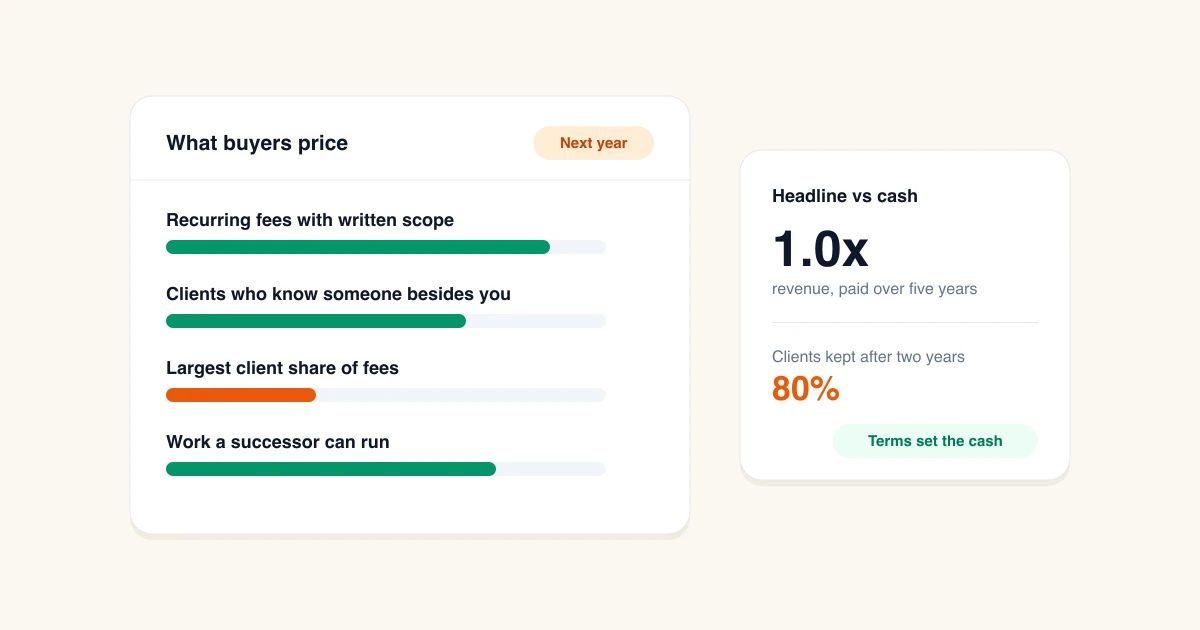
Terms and the multiple trade off. Seller-friendly terms tend to come with a lower multiple, and the reverse. Their retention example shows the gap: a buyer agrees to one times revenue, paid over five years, based on the clients still there after two years. If clients representing 80 percent of revenue stay, the seller receives 80 percent of the headline price. When you hear a multiple, ask for the rest of the sentence: of what, paid how, adjusted for what, over how long.
What buyers are actually pricing
Strip the jargon and a buyer is underwriting next year’s fees. Four qualities decide how comfortable they are.
Recurring revenue quality
A fee that will happen again is easier to price than a fee that happened. Monthly bookkeeping, payroll, sales tax, and retainers for a defined package have a next occurrence. An annual return for a client who has filed with you for a decade is recurring in a softer way: likely, but often tied to whoever they call in February.
Quality matters more than the total:
- Written scope. An engagement letter or current proposal that matches the work. “We also throw in the sales tax” is not scope.
- Collected, not just billed. A fee sitting in receivables is not cash.
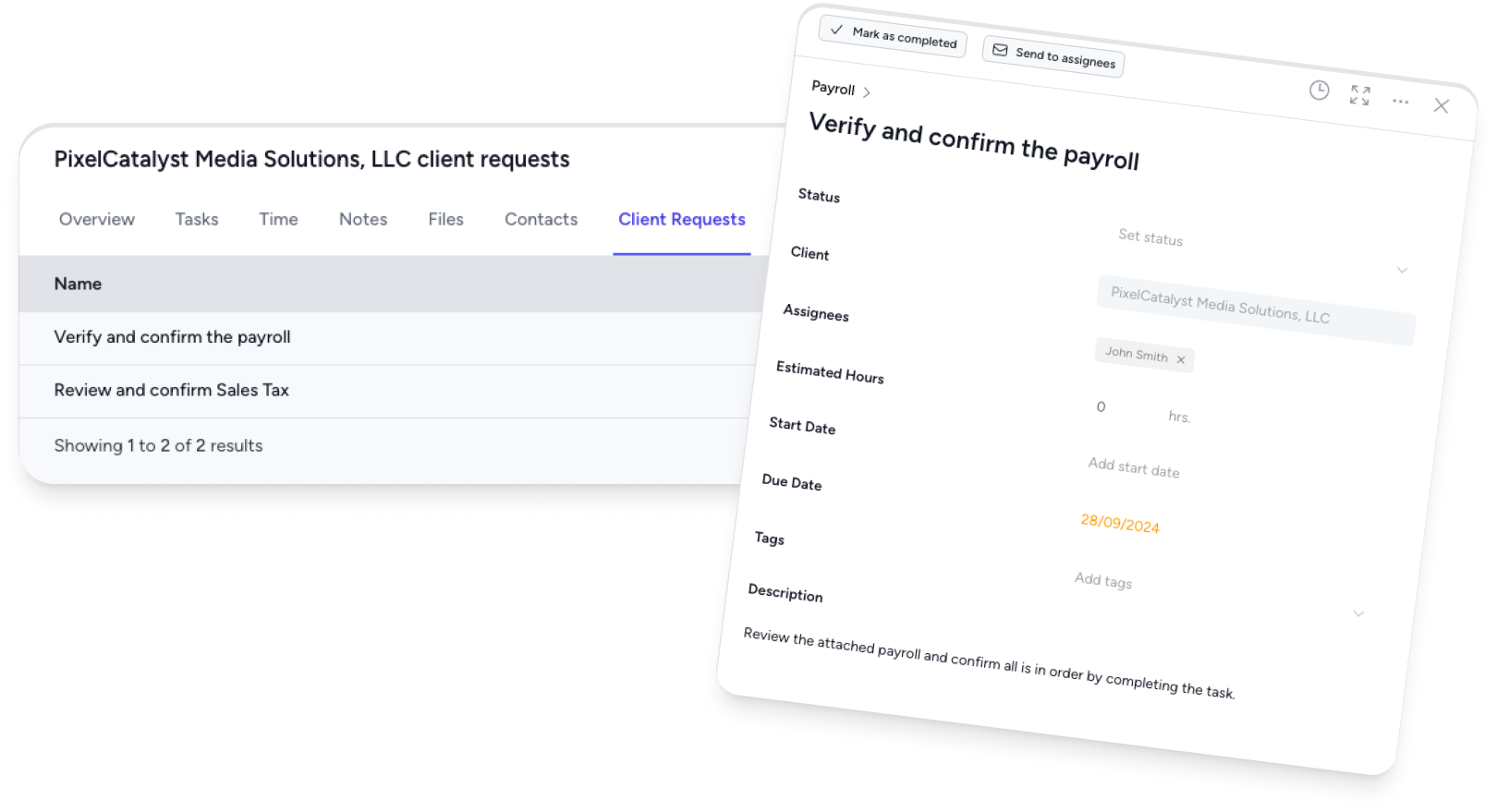
- Repeatable delivery. A job template with an owner, a reviewer, and the client requests attached. If next month is a copy of an old folder, the recurring label is cosmetic.
- Room for someone else to do it. A fee that only works because you skip review, or because you are faster than anyone you could hire, is fragile.
One-time cleanups and special projects can be good work. Describe them separately. Folding them into recurring revenue to flatter a multiple only disappoints you later.
Owner involvement
The more the practice is you, the more a buyer is buying a transition project.
In smaller firms, Sinkin and Putney noted, clients often cannot separate their relationship with the firm from their relationship with one owner. A buyer who believes clients will leave when you do will not treat the full fee total as transferable, and many deals tie what the seller receives to the fees the buyer keeps. “Clients only call me” becomes “the price is conditional.”
You lower that risk before anyone talks price. A second person has done the work and met the client. Review has a named backup and written exceptions. Notes and entity quirks are on the client record. You can be out for two weeks and the recurring jobs still move. The same work keeps an internal handoff open.
Client mix and concentration
Mix is the story behind the fee total. A buyer will ask how much is individual tax, business tax, bookkeeping, payroll, advisory, and one-time work, which clients are operating businesses, and which are individuals winding down alongside you.
Concentration is the uncomfortable version of the same page. If one client or one referral source is large enough that losing it changes the practice, a successor treats that fee as riskier than a dozen smaller ones. There is no universal cutoff. There is a question you can answer: if the largest client left, what would you cut, and who else already knows that work?
The same client list is not equally valuable to every buyer. A book of high-income individuals might suit a firm that can offer them more and interest a business-only firm much less. That is why a peer’s sale price is a weak comparison. Their buyer was pricing a fit you may not have.
Systems, margin, and whether someone else can do the work
Systems are how a stranger, or a new partner, sees that the practice is real. Deadlines in one place. Client documents requested without your personal inbox. Procedures on the job, not in a binder from 2016. The practice management software guide compares tools for that layer. The valuation point is narrower: if the system is a person, the price depends on that person staying.
Margin is the buyer’s version of the same issue. Sinkin and Putney’s plain comparison: a practice with a 20 percent margin before owners’ compensation will not command the multiple of one at 40 percent. Your KPI set will not produce a sale price, but realization, collections, and a split of recurring fees tell you whether the margin story is explainable.
Try Tidyflow
Put the work where a successor can see it.
Recurring jobs, client requests, and deadlines in one place, instead of in the owner's head. Watch a 4-minute demo, or start a free trial.
Terms change the cash, not just the headline
Owners fixate on the multiple because it is the number they can repeat. The cash depends on the terms around it. You do not need to draft them. You do need to recognize them:
- How much is paid at closing, versus later out of collections.
- How long the remaining payments run. A longer payout makes the deal affordable for the buyer and makes you wait.
- The retention period. How long, and on which fees, the price adjusts if clients leave. A very large client may be treated on its own.
- Tax treatment. This changes what you keep. Ask your tax adviser.
- Whether the buyer can profit. A deal that only works if they lose money for years is one they will retrade or avoid.
Internal transfers add a layer. Partners who helped build the practice are not strangers, and an owners’ agreement may already fix the formula, which usually comes out lower than an outside sale. Do not import an outside multiple into a partner meeting and call it fair. Read the agreement you have.
What you can improve before anyone names a number
You cannot control how many buyers exist in your city this year. You can change the facts they will read.
Separate repeating fees from one-time fees for the last two or three years. Update engagement letters where the job has outgrown the letter. Name an owner and a reviewer on the core jobs. The capacity guide helps when the reason everything sits with you is a full calendar.
Write the client ranking: fee, service, who they call, and any open problem. Move procedures onto the work, where a living job template beats a memo your team would not recognize. If recurring work stops when you are unreachable, fix the stall before anyone discusses a multiple. The sale-readiness checklist covers each of these in order.
None of this is a valuation. It is a practice you can describe without narrating from memory, which is what a valuator, a partner, or a buyer will ask for anyway.
Comparisons that mislead owners
- A multiple heard at a conference. It arrived without terms, margin, or year.
- A peer’s sale price. You cannot see their retention clause or their buyer’s fit.
- Last year’s gross fees times anything. That ignores uncollected invoices, one-time projects, and work only you can do. Gross fees describe size, not price.
- What you need to retire. That is a personal-finance question. A buyer’s price is their return and their risk.
- An outside multiple in an internal conversation. If your owners’ agreement states how a retirement interest is calculated, that document controls. Have counsel read it with you.
If you need a number for planning, hire a valuator, tell them the purpose, and give them records that stand without your commentary.
Frequently asked questions
How do buyers decide what an accounting practice is worth?
They price the fees they believe will continue after you step back, then adjust for how risky those fees are. Risk lives in owner involvement, client concentration, profit left after the work is done, and whether the work is documented. The result is a deal price, not a single correct number.
What multiple do small accounting practices sell for?
BizBuySell’s benchmarks for accounting and tax practices sold on its marketplace from 2021 to 2025 show a median of 1.02 times revenue, with the middle half between 0.92 and 1.17. Those are mostly small, owner-run practices and headline prices. Terms, retention, and your own numbers decide what you would actually receive.
Is a revenue multiple a formal valuation of an accounting practice?
No. People often talk about price as a multiple of revenue because the top line is easy to see. That shorthand is not a formal business valuation prepared by a credentialed valuator for tax, estate, or litigation purposes. A multiple without terms is not a price.
What raises or lowers accounting practice value?
Repeating fees with written scope, clients who already work with someone besides the owner, understandable margins, and systems a successor can run support a stronger price. One-person dependence, a few oversized clients, stale engagement letters, and work that cannot be explained weaken it. Terms decide how much of the headline you receive.
Are bookkeeping practices and tax practices valued the same way?
The questions are the same, and the risk is not. Monthly bookkeeping with a stable scope is easier to see into next year. A tax season built on the owner’s relationships can be valuable and still harder to transfer. Mix, margins, and who owns the client relationship matter more than the label on the door.
Can I estimate my practice’s value myself?
You can get the inputs in order: fees, collections, recurring work, concentration, and owner dependence. You should not treat a rule of thumb or a published average as your number. For a figure you will rely on, hire a qualified valuator and involve your own legal and tax advisers.
Worth is a story you can support
An accounting practice is worth what a specific successor will pay, or what your agreement already says, given fees that continue and risks they can see. You influence both by how the practice runs this year: documented recurring work, clients who know someone besides you, and numbers you can explain.
If the practice still depends on you for ordinary weeks, start with the operating work. If the goal is to retire without handing the timetable to someone else, read the succession planning guide. Leave the formal number to a valuator when you actually need one.